

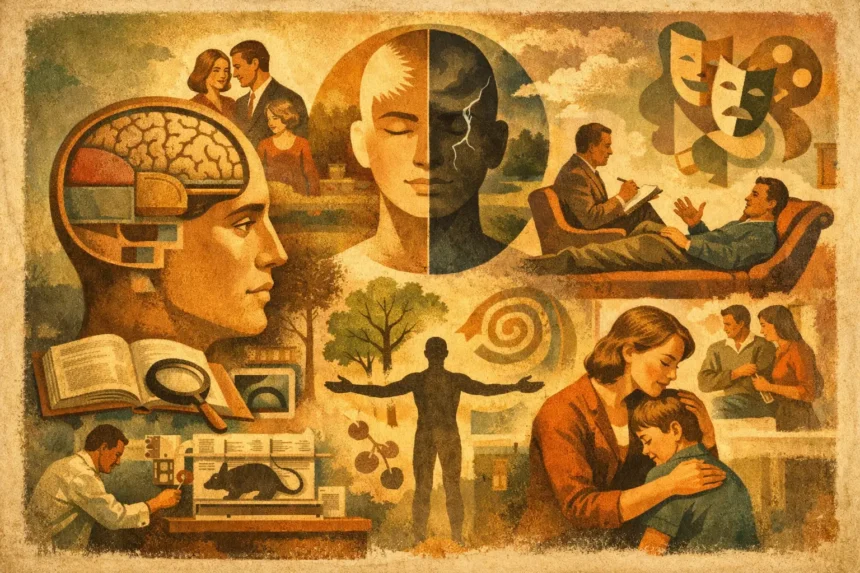
If you’ve ever wondered why you keep procrastinating, why some relationships feel secure while others feel chaotic, or why people fall for misinformation so easily, you’re already asking psychological questions. The phrase major branches of psychology explained sounds academic, but these fields are really different ways of studying the forces that shape everyday behavior, thought, emotion, and identity.
Psychology is not one single lane. It’s a cluster of specialties that ask different questions, use different methods, and often solve different kinds of problems. Some branches focus on mental health. Others study the brain, child development, group behavior, learning, work, or personality. The useful part is not memorizing labels. It’s understanding what each branch is actually for.
Why the major branches of psychology matter
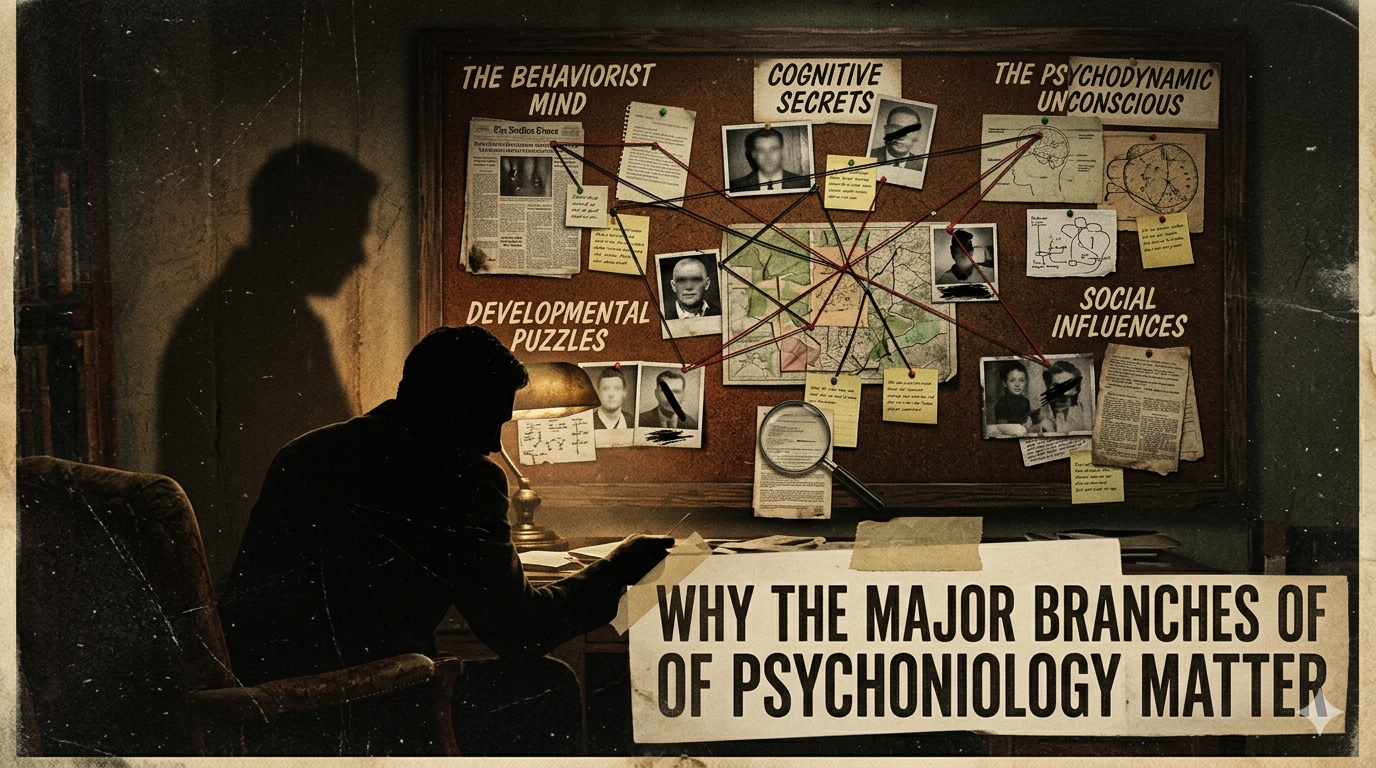
A lot of pop psychology flattens everything into one big promise: know yourself better, and life improves. Sometimes that’s true. But real psychology is more precise than that. A developmental psychologist and an industrial-organizational psychologist may both study human behavior, yet they are not trying to answer the same question.
That distinction matters because psychology gets misused when people treat one branch as if it explains everything. Brain scans won’t fully explain a breakup. Personality theory won’t diagnose a learning disorder. A workplace motivation model won’t tell you why trauma affects memory. Each branch gives you part of the picture, not the whole thing.
Clinical psychology
Clinical psychology is what most people think of first. It focuses on mental health difficulties such as depression, anxiety disorders, trauma-related symptoms, personality disorders, and other forms of emotional distress. Clinical psychologists assess, diagnose, and treat psychological problems, often using evidence-based therapies.

This is the branch most closely associated with therapy, but even here there are trade-offs. Not all emotional pain is a mental disorder, and not every difficult period calls for diagnosis. Good clinical psychology draws that line carefully. It aims to reduce suffering without pathologizing ordinary human struggle.
For everyday readers, clinical psychology matters because it shapes how we think about treatment, coping, resilience, and recovery. When you hear discussions about CBT, exposure therapy, psychological assessment, or trauma-informed care, you’re usually in clinical territory.
Counseling psychology
Counseling psychology overlaps with clinical psychology, but its center of gravity is often broader life adjustment rather than severe mental illness. It tends to focus on well-being, identity, stress, relationships, career issues, and life transitions.
The difference is not always clean. In practice, both counseling and clinical psychologists may help with anxiety, grief, or self-esteem. But counseling psychology often pays more attention to strengths, context, and helping relatively healthy people navigate difficult periods. If clinical psychology often asks, “What is impairing this person?” counseling psychology is more likely to ask, “What is blocking this person’s growth or adaptation?”
Cognitive psychology
Cognitive psychology studies how the mind processes information. That includes attention, memory, problem-solving, language, reasoning, decision-making, and perception. If you’ve ever been curious about why your brain misses obvious details, clings to false memories, or struggles to focus, this branch is doing the heavy lifting.
This field has huge real-world relevance because so much of modern life targets our cognitive limits. Notifications fragment attention. Social media exploits bias. Multitasking feels productive while often making performance worse. Cognitive psychology helps explain why.
It also keeps popular myths in check. Memory is not a video recording. Rational thinking is not our default mode. People do not simply “use logic” when emotions and cognitive shortcuts are involved. If you want to understand how thinking actually works, not how we imagine it works, this branch matters.
Developmental psychology
Developmental psychology looks at how people change across the lifespan. That includes infancy, childhood, adolescence, adulthood, and aging. It studies language acquisition, emotional regulation, attachment, moral development, identity formation, and cognitive change over time.
Many people assume this branch is mostly about children. That’s too narrow. Development doesn’t stop at 18. Adult relationships, midlife transitions, and cognitive aging all sit inside developmental psychology.
This branch is especially useful because it forces context into the conversation. A behavior that seems concerning at one age may be perfectly normal at another. A teenager’s risk-taking, a toddler’s tantrum, and an older adult’s memory changes all need to be judged against developmental expectations, not personal opinion.
Social psychology
Social psychology studies how other people shape us, even when we think we’re acting independently. It covers conformity, persuasion, prejudice, attraction, group identity, status, aggression, helping behavior, and the subtle ways social context changes judgment.
This is one of the most personally revealing branches because it challenges the comforting idea that our choices are fully self-authored. Social psychologists show how strongly behavior is influenced by norms, incentives, belonging, fear of exclusion, and the need to protect identity.
If you want to understand online pile-ons, conspiracy thinking, dating behavior, office politics, or why smart people defend bad beliefs, social psychology is often the clearest lens. It reminds us that humans are not just individual minds. We are social organisms reading the room all the time.
Biological psychology
Biological psychology, sometimes called biopsychology or behavioral neuroscience, studies how the brain, nervous system, hormones, and genetics influence behavior and mental processes. It asks what is happening in the body when we feel fear, motivation, pleasure, stress, or attachment.
This branch is powerful, but it gets oversold in popular media. Biological explanations can sound definitive because they seem concrete. If a headline mentions dopamine or the amygdala, people often assume the case is closed. It rarely is. Biology matters enormously, but it does not erase learning, environment, culture, or personal history.
Still, this field helps explain major pieces of the human story, from sleep and addiction to emotional regulation and stress reactivity. It gives psychology one of its most grounded reminders: the mind is not floating above the body.
Personality psychology
Personality psychology examines the patterns that make people relatively consistent over time. It studies traits, temperament, motives, self-concept, and the ways people differ in emotionality, sociability, conscientiousness, openness, and more.
This branch attracts a lot of public interest because people want to know who they are. That’s understandable, but personality psychology is most useful when it moves beyond labels. A good trait model does not put you in a box. It helps explain predictable tendencies, strengths, and vulnerabilities.
For example, high conscientiousness may support achievement but also perfectionism. High agreeableness may help relationships, but make boundary-setting harder. Personality psychology is valuable not because it gives identity a neat sticker, but because it shows how stable patterns interact with life demands.
Educational psychology
Educational psychology focuses on how people learn and what supports effective teaching, motivation, memory, and academic development. It looks at feedback, attention, learning differences, classroom environments, and the gap between effort and actual retention.
This branch matters far beyond schools. Most adults are still learners, whether they’re building new skills, changing careers, or trying to improve habits. Educational psychology helps cut through common myths, such as the idea that rereading equals learning or that motivation must come before action.
In practice, it offers some of psychology’s most useful insights: retrieval beats passive review, feedback works best when it’s specific, and confidence is not the same as competence.
Industrial-organizational psychology
Industrial-organizational psychology applies psychological science to work. It studies hiring, leadership, motivation, team dynamics, burnout, decision-making, job design, and organizational culture.
This branch matters because work shapes mood, identity, stress, and even relationships outside the office. It asks practical questions with high stakes: What makes managers effective? Why do some teams trust each other while others collapse into politics? What actually improves performance without wrecking well-being?
It also corrects simplistic workplace narratives. People are not productive just because they’re told to care more. Incentives, autonomy, fairness, role clarity, and psychological safety all matter. A lot of what gets called laziness at work is better explained by poor systems.
Which branch explains real life best?
None of them alone. That’s the point!
The major branches of psychology explained in isolation are useful, but real life is messier. Anxiety can involve biology, cognition, development, personality, and social environment at the same time. Attraction can be shaped by attachment history, social norms, reward systems, and individual traits. Burnout can reflect workplace structure, coping style, and cultural expectations all at once.
That’s why the strongest psychology content cuts through the myths and pseudo-science instead of forcing every question into one framework. Different branches are not competing fandoms. They are tools. The smarter move is knowing which tool fits the question.
If you want a more perceptive way to understand yourself and other people, start there: not with one grand theory, but with the branch that best explains the behavior in front of you. That shift alone makes human nature look a lot less confusing and a lot more readable.