
- How psychology shapes everyday life from the moment you wake up
- Your brain is efficient, not neutral
- Emotions are not the enemy of logic
- Relationships run on perception as much as reality
- Attention is being competed for all day
- Identity quietly directs behavior
- Psychology does not remove responsibility – it sharpens it
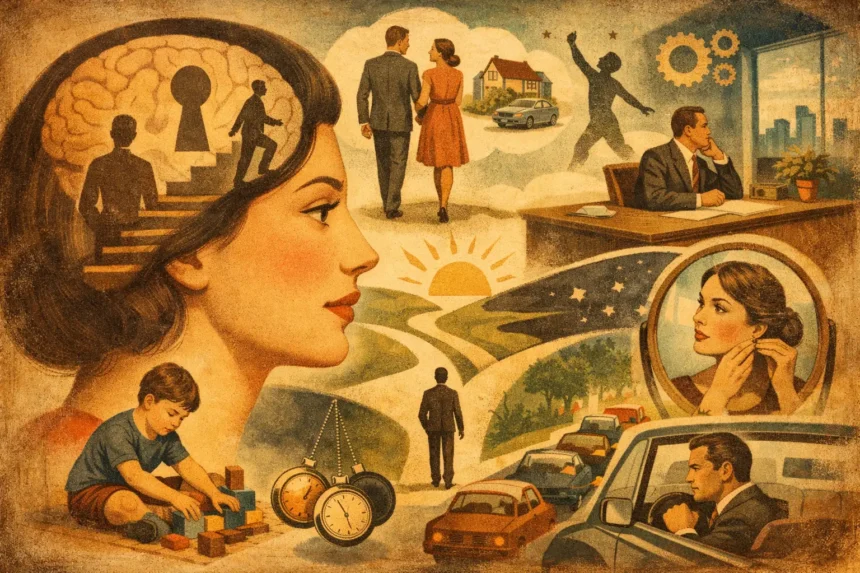
You snooze your alarm, check your phone before your feet hit the floor, and feel oddly annoyed by a message that simply says “K.” None of that is random. If you want to understand how psychology shapes everyday life, start with this: much of what feels personal, natural, or obvious is being steered by mental shortcuts, emotional cues, social pressure, and learned patterns you barely notice.
That is exactly why psychology matters outside therapy rooms and university labs. It explains why people stay in mediocre routines, why first impressions stick so hard, why some habits become automatic, and why smart people still make strange decisions when tired, stressed, or trying to fit in. Once you can see the machinery, everyday life starts looking less mysterious and a lot more readable.
How psychology shapes everyday life from the moment you wake up
Morning behavior is a good example because it exposes the gap between intention and action. Most people do not wake up and carefully decide each next move. They follow cues. The phone buzzes, so they check it. The kitchen light goes on, so they make coffee. The brain loves efficiency, which means it turns repeated behaviors into habits to save effort.
This is useful until it is not. Habits reduce mental load, but they also make life feel more automatic than deliberate. If your environment is built around distraction, convenience food, and endless notifications, your behavior often follows. That does not mean people lack discipline. It means context is powerful.
Psychologists have long shown that behavior is shaped not just by goals, but by friction and cues. Put a book on your pillow, and you are more likely to read. Keep your phone within reach during work, and your attention will fracture more often. People like to think they act from stable preferences, but in many cases, they are responding to what is easiest, nearest, or most emotionally charged in the moment.
Your brain is efficient, not neutral
A lot of daily life runs on cognitive shortcuts. These shortcuts, often called heuristics, help people make fast judgments without analyzing every detail. That is adaptive. You could not function if you treated every decision like a legal trial. But the trade-off is predictable bias.

Take the availability heuristic. If a dramatic event is easy to remember, people tend to overestimate how common it is. That is why news coverage can distort your sense of risk. If social media floods you with stories about betrayal, burnout, or catastrophe, the world can start to feel more dangerous or hostile than it statistically is.
Confirmation bias works the same way in quieter settings. Once people believe a coworker is arrogant, they notice evidence that supports it and ignore evidence that does not. Once they decide a date is promising, awkward moments get reinterpreted as charming. This is not stupidity. It is the brain trying to create coherence from incomplete information.
The problem is that coherence can become overconfidence. People often feel certain long before they are accurate.
Emotions are not the enemy of logic

One of the most persistent myths in popular culture is that rational people make decisions without emotion. Psychology says otherwise. Emotion is part of decision-making, not a contamination of it.
If you have ever postponed sending an email because it felt risky, bought something after a bad day, or avoided a conversation that might create conflict, you have already seen this in action. Feelings shape what grabs your attention, what feels urgent, and what your brain tags as safe or threatening.
This becomes especially obvious under stress. When people are overwhelmed, they become more likely to default to short-term relief over long-term benefit. That can mean doomscrolling instead of sleeping, snapping at a partner instead of explaining frustration, or sticking with familiar habits instead of trying something better.
Emotion also influences memory. People remember events not as perfect recordings, but as experiences filtered through mood, attention, and meaning. That is one reason two people can live through the same argument and walk away with genuinely different versions of what happened.
Relationships run on perception as much as reality
A huge part of everyday friction is psychological, not logistical. People rarely react only to what happened. They react to what they think it means.
If a friend takes hours to reply, one person thinks they are busy. Another thinks, they are pulling away. Same event, different interpretation. Attachment style, past experiences, and emotional state all shape the meaning people assign to behavior.
That is why relationships are so vulnerable to misreading. Humans are wired to infer motives, detect rejection, and protect their social standing. Sometimes that helps. Sometimes it creates conflict out of ambiguity.
Psychology also explains why validation feels so powerful. People do not just want agreement. They want to feel seen accurately. A partner saying, “I get why that bothered you,” often works better than immediately offering solutions. Emotional intelligence matters here not because it is trendy, but because social life depends on reading signals well and responding without escalating unnecessary threat.
Attraction, too, is more psychological than most people assume. Familiarity increases liking. Similarity often matters more than dramatic difference. Confidence can be appealing, but so can warmth, responsiveness, and a sense of safety. The stories people tell about chemistry are often less mystical than they sound.
Attention is being competed for all day
Modern life is a giant experiment in applied psychology. Apps, advertising, workplace tools, and news platforms are all designed around human attention, reward, and behavior.
Variable rewards are one reason scrolling is so hard to stop. If every refresh brought nothing interesting, people would quit. But unpredictable rewards keep them engaged. The brain learns that the next swipe might bring novelty, validation, or useful information. That same learning process sits behind many sticky habits, both harmless and harmful.
This matters because attention is not just a resource. It shapes experience. What you repeatedly attend to starts to define your reality. If your media diet emphasizes outrage, comparison, and urgency, your inner life often starts to mirror that rhythm. If it emphasizes depth, perspective, and recovery, your mind tends to feel different.
There is no perfectly pure way to live outside influence. The real question is whether your environment is training your mind in ways you would actually choose.
Identity quietly directs behavior
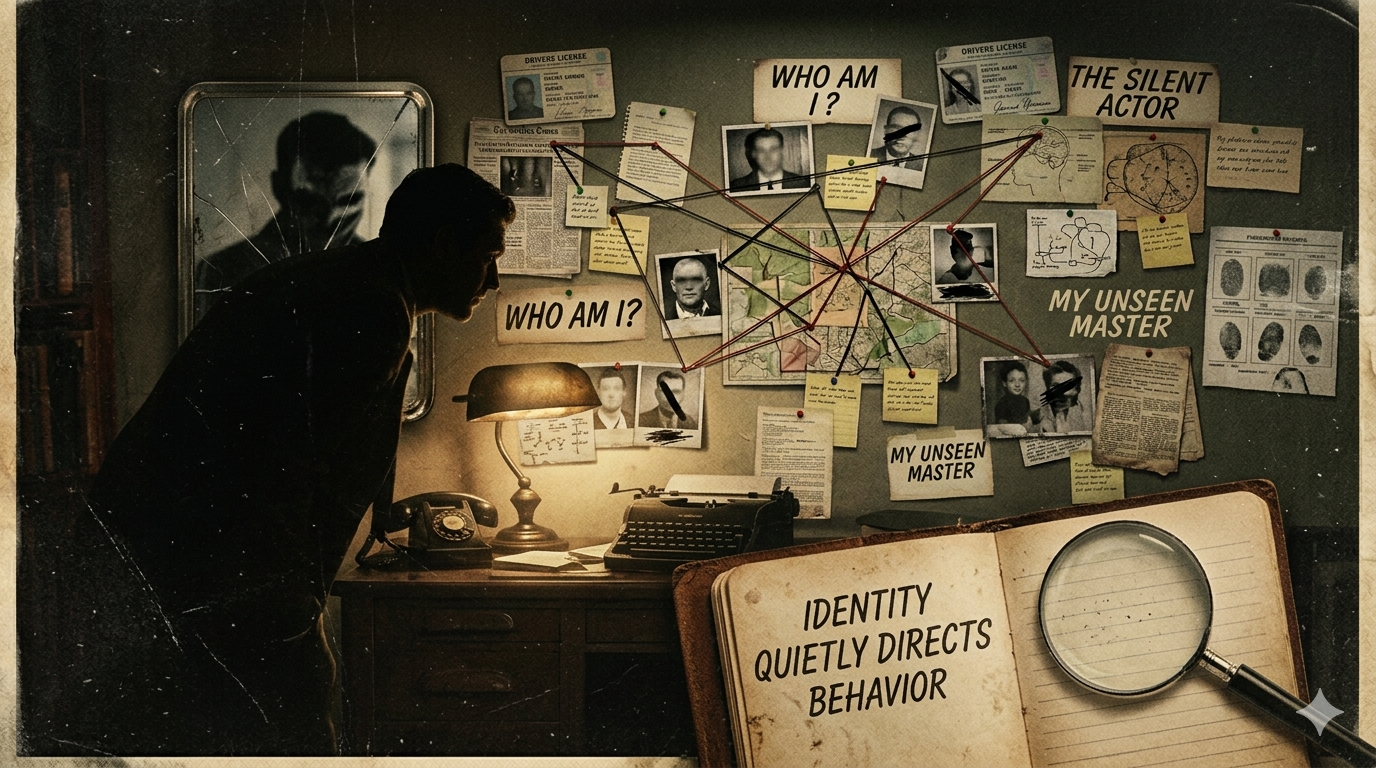
People tend to think behavior comes first and identity follows. In practice, the relationship runs both ways. What you believe about yourself changes what feels natural, possible, or worth doing.
Someone who sees themselves as “bad at relationships” may avoid vulnerability and then treat the resulting distance as proof. Someone who identifies as “not a gym person” may interpret one missed workout as evidence they were never the type to begin with. Identity can become a self-fulfilling prophecy.
This is one reason shame is usually less effective than people think. Shame focuses attention on the self as flawed. It often leads to withdrawal, defensiveness, or giving up. Guilt is different. It focuses on behavior and leaves room for repair.
Small changes stick better when they fit an identity people can believe in. Reading one page a night is not impressive, but it helps someone become a person who reads. Speaking up once in a meeting does not transform confidence overnight, but it challenges the identity of being the person who always stays quiet.
Psychology does not remove responsibility – it sharpens it
Understanding behavior psychologically does not mean excusing everything. It means becoming more precise about cause and effect. If you know sleep loss makes you more impulsive, that matters. If you know you get defensive when you feel criticized, that matters too. Awareness is not magic, but it gives you leverage.
This is also where pop psychology often gets things wrong. It promises simple hacks for complicated problems, as if one mindset shift can override biology, stress, social context, and history. Real psychology is more useful because it is less theatrical. It accepts that people are shaped by multiple forces at once.
Sometimes your behavior reflects a belief. Sometimes it reflects exhaustion. Sometimes it reflects an environment that keeps cueing the same loop. Usually, it is some mix of all three.
That is the value of applying psychology to ordinary life. It helps you cut through myth, spot hidden influences, and stop treating every struggle as a personal defect. The better you understand the forces shaping attention, emotion, judgment, and identity, the more choice you actually have.
The next time a reaction feels immediate, a habit feels automatic, or a conflict feels strangely familiar, pause before calling it just the way things are. Every day of life is full of psychological patterns. Once you notice them, you do not become perfectly rational. You become harder to fool, including by your own mind.