
- What is psychology?
- What psychology studies in real life
- A beginner’s guide to the main branches of psychology
- Clinical psychology
- Cognitive psychology
- Social psychology
- Developmental psychology
- Biological and neuroscience-based psychology
- Counseling, educational, and organizational psychology
- What psychology is not
- Why psychology matters outside the classroom
- How psychologists actually study people
- How to start learning psychology without getting lost
- What psychology can give you
You already use psychology every day, even if you have never opened a textbook. The moment you wonder why you procrastinate, why certain people feel instantly trustworthy, or why stress hijacks good decisions, you are asking psychological questions. That is why “What is psychology? A Beginner’s Guide” matters more than it sounds. This is not just a school subject. It is one of the most useful lenses for understanding yourself and everyone around you.
What is psychology?
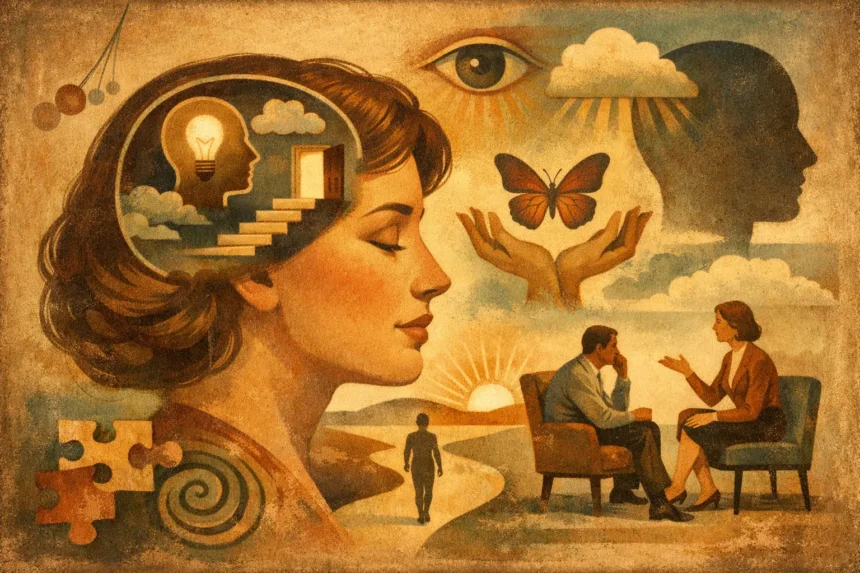
Psychology is the scientific study of mind, behaviour, and mental processes. In plain English, it asks how people think, feel, learn, remember, choose, relate, cope, and act.
That definition is broader than most people expect. Psychology is not only about mental illness, childhood trauma, or lying on a couch talking about your dreams. It also looks at attention, motivation, attraction, habits, group behavior, identity, stress, decision-making, personality, and the hidden shortcuts your brain uses every day.
The keyword here is scientific. Good psychology is built on observation, measurement, experiments, and careful interpretation. It tries to cut through myths and pseudo-science by asking, “What does the evidence actually show?” That does not mean psychology always gives neat, final answers. Human behavior is messy. Context matters. Culture matters. Biology matters. Still, psychology gives us better tools for understanding that complexity than guesswork ever could.
What psychology studies in real life
If you are new to the field, it helps to think of psychology as the study of patterns. Not rigid rules, but patterns in how people think and behave.
Psychologists study questions like why some habits stick, and others collapse after three days, why anxiety can make small risks feel huge, why people conform to group norms even when they disagree, and why memory is less like a video recording and more like a reconstruction.
They also study what improves well-being. That includes sleep, relationships, emotional regulation, purpose, coping strategies, and social support. In other words, psychology is not just about what goes wrong. It is also about what helps people function, grow, and adapt.
This is what makes the subject so compelling. It sits at the intersection of biology, emotion, culture, learning, and environment. If you want to understand modern life, from dating apps to burnout to conspiracy thinking, psychology gives you a serious starting point.
A beginner’s guide to the main branches of psychology
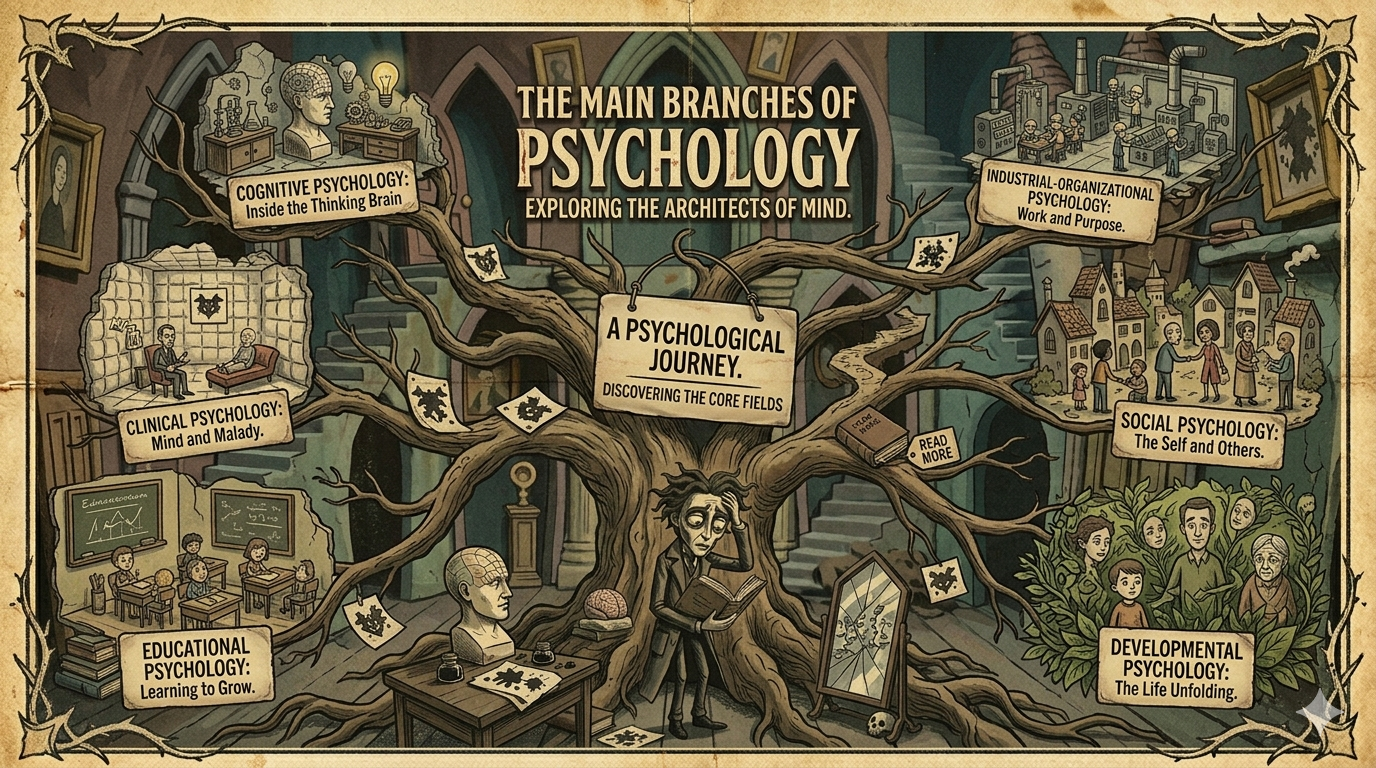
One reason psychology can feel confusing is that it is not one single topic. It is a large field with different subfields, each focused on a different slice of human experience.
Clinical psychology
This is the branch most people think of first. Clinical psychology focuses on assessing and treating mental health difficulties such as depression, anxiety disorders, trauma-related conditions, and personality disorders. It also looks at how people cope, function, and recover.
Cognitive psychology
Cognitive psychology studies mental processes like attention, memory, learning, problem-solving, and perception. If you want to know why your brain misses obvious details, falls for mental shortcuts, or struggles to focus in a distracted world, this is the territory.
Social psychology
Social psychology examines how other people shape us. It looks at conformity, prejudice, attraction, persuasion, group dynamics, identity, status, and the powerful influence of social context. A lot of modern behavior that feels personal is actually deeply social.
Developmental psychology
This branch studies how people change across the lifespan, from infancy to old age. It explores emotional development, attachment, moral reasoning, language, identity, and aging. Developmental psychology reminds us that people are always changing, not just in childhood.
Biological and neuroscience-based psychology
This area looks at the relationship between the brain, nervous system, hormones, genetics, and behavior. It asks how biology shapes emotion, motivation, fear, reward, and mental health. This matters, but it is not the whole story. Biology influences behavior, yet environment and experience shape it too.
Counseling, educational, and organizational psychology
These areas apply psychological principles to everyday settings. Counseling psychology supports well-being and life adjustment. Educational psychology looks at how people learn. Organizational psychology studies motivation, leadership, workplace behavior, and performance. This is where psychology starts to feel very practical, very quickly.
What psychology is not
A useful beginner’s guide also needs a little myth-busting.
Psychology is not mind-reading. It cannot tell you exactly what someone is thinking just by looking at them. It is not a collection of personality memes or vague statements that sound true for everyone. It is also not a magic key that explains every behavior with one simple cause.
People often want one reason for why they do what they do. The reality is usually less tidy. A person’s behavior might reflect personality, stress, childhood experience, current incentives, social pressure, sleep quality, past learning, and plain old circumstance. Psychology gets stronger when it respects that complexity instead of flattening it.
It is also worth separating psychology from pop psychology. Pop psychology often takes a real concept and stretches it beyond what the evidence supports. You see this in social media claims about trauma, narcissism, attachment styles, or body language. Some of those ideas contain truth. Many get simplified into click-ready certainty. Real psychology is usually more careful than that.
Why psychology matters outside the classroom
The best reason to learn psychology is that it improves your ability to interpret life accurately.
When you understand cognitive biases, you make better decisions. When you understand reinforcement, you build better habits. When you understand attachment, conflict, and emotional regulation, your relationships improve. When you understand stress responses, you stop treating every struggle as a personal failure.
Psychology also helps you become less gullible. You start noticing how framing changes perception, how social proof affects choices, and how emotions can distort judgment. That does not make you immune to bad decisions. It just makes you more aware of the forces acting on you.
For a brand like The Psychology of Everything, that is the point. Psychology is not interesting only because it explains disorders or academic theories. It matters because it helps people see what is really driving behavior, including their own.
How psychologists actually study people
If psychology is a science, how does it gather evidence?
Researchers use experiments, surveys, interviews, brain imaging, observational studies, longitudinal tracking, and statistical analysis. Each method has strengths and weaknesses. Experiments can test cause and effect, but sometimes in artificial settings. Surveys can reveal patterns across large groups, but people are not always accurate reporters of their own behavior. Brain scans can show activity, but they do not read thoughts in a simple way.
This is where beginners sometimes get frustrated. Psychology is full of findings, but not all findings are equally strong. One study rarely settles anything. Better evidence comes from repeated results, stronger methods, larger samples, and careful replication.
That uncertainty is not a flaw. It is part of scientific honesty. In psychology, a good answer is often, “It depends on the person, the setting, and the quality of the evidence.”
How to start learning psychology without getting lost
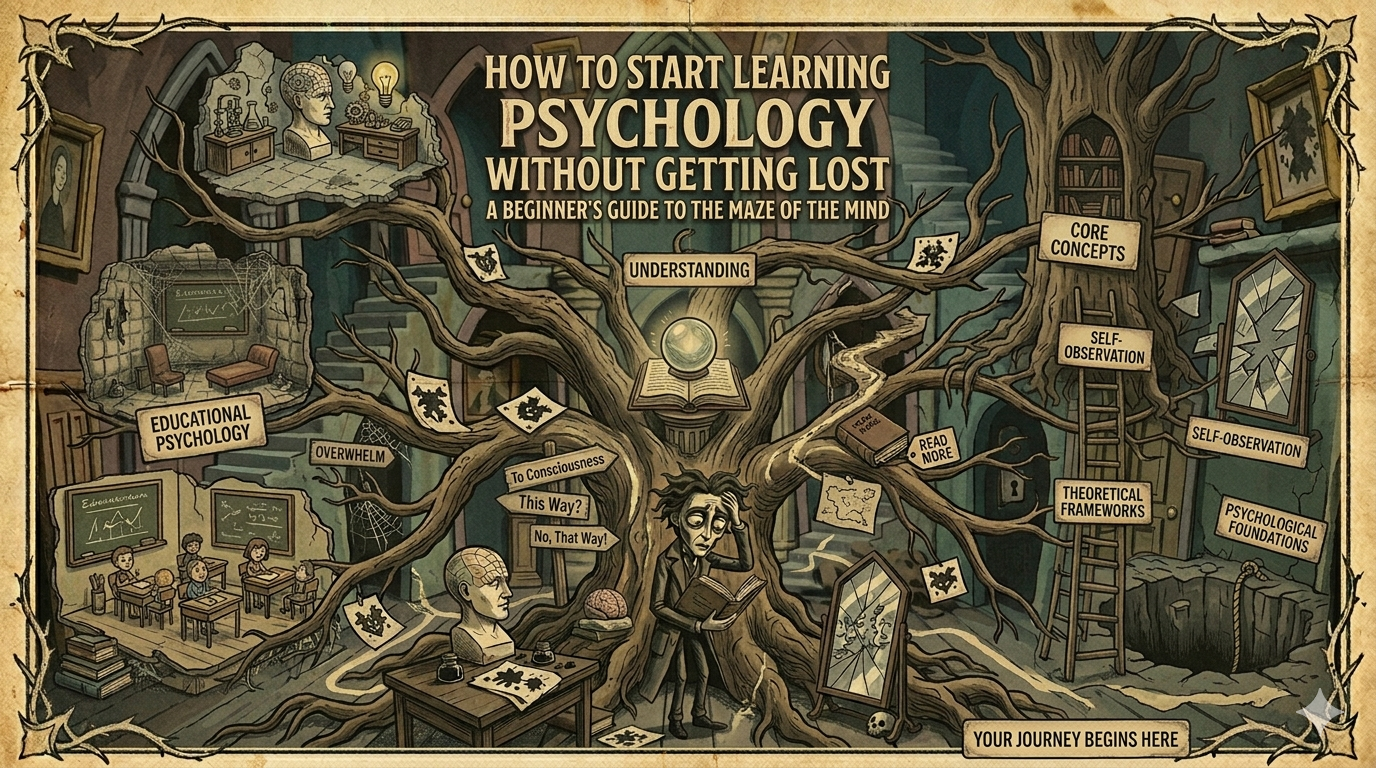
If you are new to the subject, start with questions that already matter to you. Why do I avoid hard tasks? Why do people stay in bad relationships? Why does anxiety feel so convincing? Why do groups become irrational online? Those are psychologically rich questions, and they make the field easier to connect with.
It also helps to learn a few core ideas early: cognition, emotion, behavior, reinforcement, attachment, bias, personality, stress, and social influence. Once those concepts click, a lot of other topics start making sense.
Be careful with oversimplified frameworks. Labels can be useful, but they can also become identity traps. Not every bad boss is a narcissist. Not every uncomfortable feeling is trauma. Not every preference is a fixed personality trait. Good psychology gives language to experience, but it should not turn people into cartoons.
A smart beginner stays curious and skeptical at the same time. That means appreciating what psychology can explain without asking it to explain everything.
What psychology can give you
At its best, psychology does something powerful. It makes behavior less mysterious without making people less human.
What Is Psychology? It helps you notice patterns before they become problems. It helps you ask better questions about your habits, fears, motivations, and relationships. It gives you a way to understand why people are often irrational, inconsistent, defensive, loving, avoidant, loyal, self-sabotaging, and surprisingly changeable.
And that may be the most useful place to end: psychology will not hand you a perfect theory of every person you meet, including yourself. What it can give you is sharper perception, better judgment, and a more evidence-based way to make sense of the chaos of being human.