

- The hidden psychology behind why we procrastinate is emotional, not just practical
- Why your brain keeps choosing relief over progress
- Perfectionism is one of the biggest hidden drivers
- Procrastination can protect your self-image
- The role of task meaning in why we procrastinate
- The hidden psychology behind why we procrastinate also involves identity
- What actually helps break the cycle
You sit down to send the email, finish the proposal, start the workout, make the doctor’s appointment, or finally open the document you’ve been avoiding all week. Then, somehow, you’re checking your messages, reorganizing your tabs, or convincing yourself you’ll do it later when you can “focus properly.” If that sounds familiar, the hidden psychology behind why we procrastinate has less to do with laziness than most people think.
Procrastination is often framed as a time-management problem. That story is neat, flattering, and wrong. Most chronic delay is not about failing to use a planner. It is about trying to regulate uncomfortable emotions in the short term, even when that short-term relief creates bigger problems later.
The hidden psychology behind why we procrastinate is emotional, not just practical
At its core, procrastination is a mood repair strategy. When a task makes you feel anxious, bored, overwhelmed, insecure, resentful, or mentally exposed, your brain looks for escape. That escape might be social media, snacks, cleaning, busywork, or even other productive tasks. The details vary, but the mechanism is the same: avoid the feeling by avoiding the task.
This matters because it cuts through one of the biggest myths around procrastination. People often assume they delay because they are undisciplined. In reality, many procrastinators care a lot. Sometimes too much. They are not disengaged from the task. They are emotionally entangled with it.
A presentation is not just a presentation if it might reveal that you are less competent than people think. A job application is not just paperwork if rejection feels like a verdict on your future. A creative project is not just work if it touches identity, talent, ambition, and fear of judgment. Delay starts making psychological sense once you see the emotional stakes attached to the task.
Why your brain keeps choosing relief over progress
From a behavioral perspective, procrastination is reinforced because it works, at least briefly. The moment you avoid a stressful task, your discomfort drops. That reduction in tension feels rewarding. Your brain learns fast: when this task shows up, escape helps.

This is one reason procrastination can become a stubborn habit even when it repeatedly backfires. The reward is immediate, while the cost is delayed. Human brains are famously bad at prioritizing distant consequences over instant relief. We are much more responsive to what changes our emotional state right now.
Psychologists sometimes describe this as present bias. Future you will handle the hard conversation, the taxes, the essay, and the life admin. Presently, you get to feel better for the next ten minutes. The problem is that each act of delay increases the pressure around the task, which makes it feel even more aversive the next time. That is how procrastination becomes a loop rather than a one-off bad habit.
Perfectionism is one of the biggest hidden drivers
People usually picture procrastinators as careless. But one of the strongest predictors of procrastination is perfectionism, especially the kind built around fear of failure and harsh self-judgment.
If you believe your work has to be excellent to be acceptable, starting becomes risky. A blank page protects you from evidence. An unfinished project cannot yet disappoint you. Delay becomes a way of preserving possibility. As long as you have not fully tried, you can still tell yourself the outcome would have been better under different conditions.
This is why perfectionism and procrastination often travel together. Perfectionism raises the emotional cost of effort. It turns normal tasks into ego threats. And when your self-worth feels tied to performance, avoiding the task can feel safer than doing it imperfectly.
There is a trade-off here, though. High standards are not automatically a problem. They can support excellent work. The issue is when standards become fused with identity, so that mistakes feel personally humiliating rather than informative.
Procrastination can protect your self-image
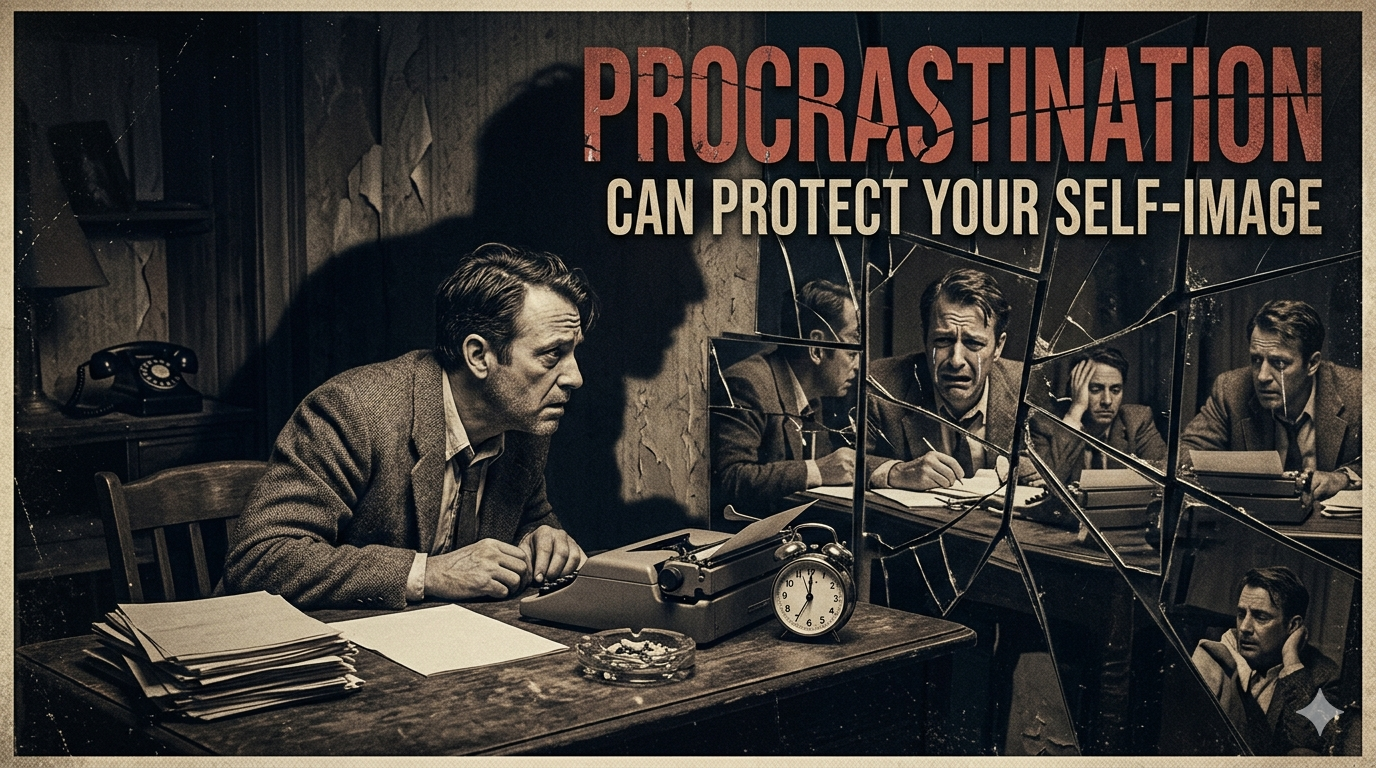
There is another psychological layer that gets less attention: procrastination can function as self-handicapping. If you start late, rush the work, and perform badly, you have a ready-made explanation. You did not have enough time. You were tired. The conditions were bad.
That story can be easier to live with than a more threatening possibility: I tried fully, and the result still wasn’t great.
This does not mean people consciously sabotage themselves in a calculated way. Usually, it happens outside awareness. But the logic is powerful. Delay protects the ego by creating ambiguity around performance.
In that sense, procrastination is not always a failure of motivation. Sometimes it is a defensive strategy for preserving self-esteem.
The role of task meaning in why we procrastinate
Not all procrastination comes from fear. Some of it comes from disconnection. Tasks that feel meaningless, imposed, repetitive, or misaligned with your values are harder to engage with because they offer little psychological payoff.
Your brain is constantly asking, often below the surface, why this and why now? When the answer is weak, initiation becomes harder. This is especially true for modern work, where many people spend their days on abstract tasks with delayed rewards and unclear endpoints. A spreadsheet rarely activates the same motivation system as a concrete, immediate challenge.
That does not mean every delayed task is secretly wrong for you. Sometimes boring things are just boring. But when procrastination is chronic around one area of life and not others, it is worth asking whether the issue is self-control or unresolved ambivalence.
The hidden psychology behind why we procrastinate also involves identity
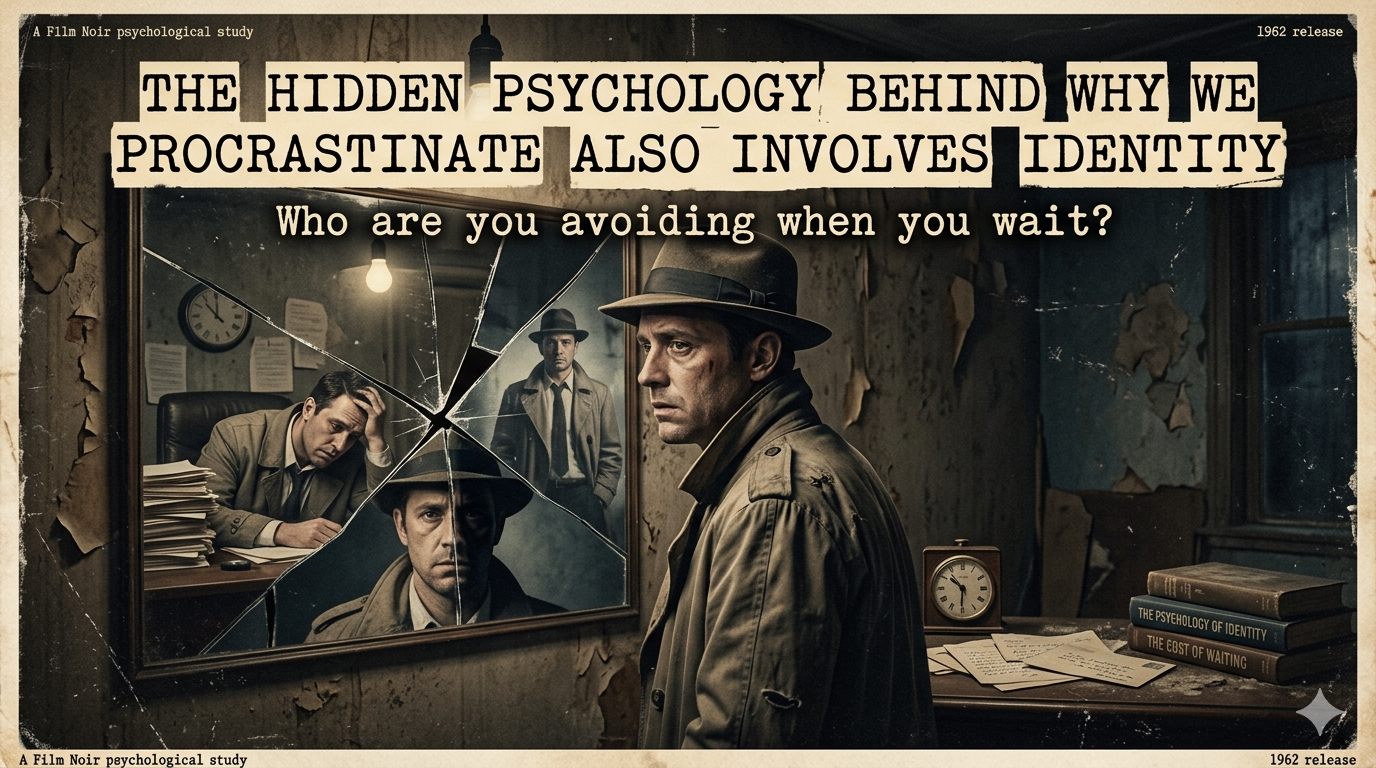
People do not procrastinate in a vacuum. They procrastinate as students, professionals, parents, creatives, partners, and people with private narratives about who they are.
If you see yourself as someone who always leaves things too late, that identity can become self-reinforcing. You stop experiencing procrastination as a pattern you can interrupt and start experiencing it as your personality. That shift matters. Behaviors are easier to change than identities.
There is also the opposite problem: people who base their identity on being capable, smart, or naturally talented may delay tasks that threaten that image. If effort feels like proof that something does not come easily, they may avoid beginning at all. Psychologically, it can feel safer to delay than to risk looking ordinary.
This is one reason procrastination is common among high achievers. Competence does not cancel out emotional avoidance. Sometimes it hides it better.
What actually helps break the cycle
If procrastination were just a discipline problem, the solution would be simple: try harder. But because the real issue is often emotional friction, effective strategies tend to reduce threat, lower activation energy, and make starting feel psychologically safer.
One useful shift is to stop asking, “How do I make myself want to do this?” and start asking, “What feeling am I trying not to have?” That question is less flattering, but much more accurate. Once you name the emotion – anxiety, confusion, resentment, insecurity, boredom – the task becomes easier to work with.
From there, the goal is not heroic motivation. It is reducing resistance. Make the task smaller than your brain thinks it is. Open the file and write one bad sentence. Set a ten-minute timer. Draft the ugly version. Decide the first step before you are in the moment of avoidance. These strategies sound basic, but they work because they target initiation, which is where procrastination usually wins.
Self-talk matters too. Harshness tends to increase avoidance, not reduce it. When people miss a deadline or waste a day, they often respond with shame and self-criticism, then expect that emotional state to produce better behavior. Usually, it does the opposite. A more effective response is honest but non-punitive: that did not work, so what made this task feel costly, and how do I lower the barrier next time?
This is where evidence-based psychology is more useful than motivational theater. The point is not to become a perfectly optimized person who never delays anything. The point is to understand the mechanism well enough that you stop mistaking emotional avoidance for a moral flaw.
For readers who follow platforms like The Psychology of Everything, that distinction is part of the bigger value of psychology itself. When you can see the hidden drivers of your behavior, you get more leverage over it.
Procrastination loses some of its power when you stop treating it as a character defect and start reading it as information. Usually, it is telling you that a task feels threatening, muddy, or more personally loaded than it appears on the surface. The useful question is not why am I like this. It is what is this delay protecting me from, and is that protection still worth the price?