
- Why AI-triggered job insecurity feels different
- The hidden drivers behind the psychology of job insecurity in the AI era
- Status threat matters as much as income threat
- Uncertainty amplifies worst-case thinking
- Identity gets tangled up with productivity
- Why do some people feel it more than others?
- What does job insecurity do to behavior?
- What actually helps psychologically
- Shift from total control to influence
- Separate your job from your identity
- Get concrete fast
- Watch for nervous system overload
- The bigger truth people miss
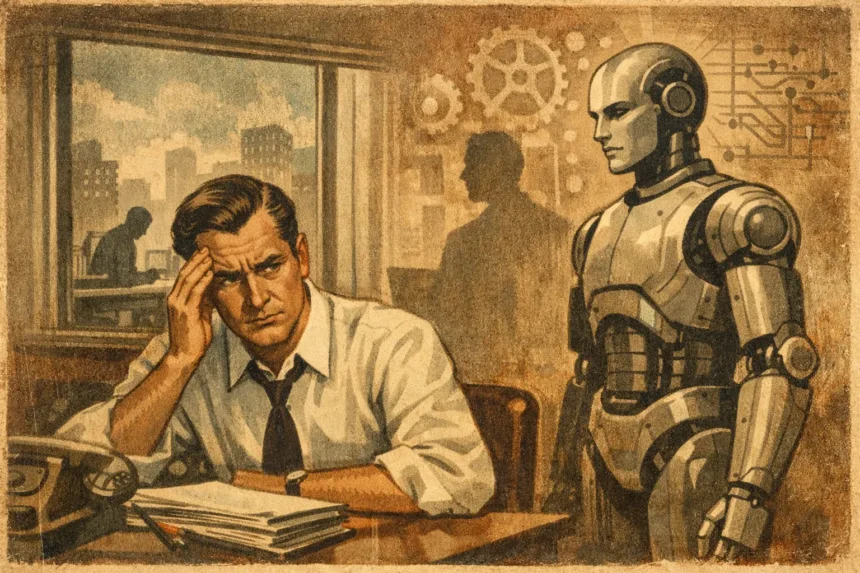
Your boss says AI will make the team more efficient, and nobody gets fired. Then three weeks later, half your work is being tested through new software, Slack goes strangely quiet, and every meeting starts to feel like a coded message. That is where the psychology of job insecurity in the AI era becomes real – not as an abstract economic trend, but as a daily mental load.
What makes this form of insecurity so intense is that it not only threatens income. It threatens identity, status, competence, and a person’s sense of being needed. Work is where many people organize adulthood. It shapes routine, social belonging, and self-respect. When AI enters that space, the fear is not just, Will I lose my job? It is also, Will I still matter in the way I thought I did?
Why AI-triggered job insecurity feels different
People have always worried about being replaced. But AI creates a distinct psychological cocktail: uncertainty, invisibility, and speed. Unlike a traditional restructure, the threat can feel vague. There may be no formal layoffs, no single announcement, and no clear moment when change begins. Instead, tasks quietly disappear. Expectations shift. Skills that took years to build suddenly seem less scarce.
Psychologically, ambiguous threats are often harder to manage than obvious ones. The brain prefers a known problem over a vague one because known problems allow planning. Vague threats keep the stress response switched on. You monitor signals constantly, overinterpret small changes, and start scanning for danger in ordinary workplace interactions.
That is one reason AI anxiety can feel so sticky. It is not just fear of loss. It is anticipatory stress, where the mind keeps rehearsing possible futures without enough information to settle on any of them.
The hidden drivers behind the psychology of job insecurity in the AI era
A lot of commentary treats AI fear as rational forecasting, as if workers are doing a cold calculation about labor markets. But emotion is doing far more of the work than people realize.

Status threat matters as much as income threat
Humans are deeply sensitive to rank and relevance. If a machine can produce in seconds what you spent years learning to do, the pain is not only financial. It can feel humiliating. That reaction is not vanity. It reflects a basic psychological need to feel competent and valued within a group.
Research on status threat shows that people become more defensive, anxious, and resistant when they sense a drop in social worth. In workplaces, this can show up as cynicism about AI, anger at leadership, or dismissing new tools as a fad. Sometimes that skepticism is justified. Sometimes it is also a defense against the sting of feeling replaceable.
Uncertainty amplifies worst-case thinking
The brain is not a neutral prediction engine. Under stress, it leans negative. If your role is changing and nobody can clearly explain how, your mind fills in the blanks. That can lead to catastrophizing: one automation pilot becomes proof that your career is doomed.
This does not mean the fear is irrational. It means the mind is doing what minds often do under ambiguity – treating uncertainty as danger, in small doses, that can motivate adaptation. In excess, it drains attention, sleep, and confidence, which makes adaptation harder.
Identity gets tangled up with productivity
Many adults have been taught, directly or indirectly, that their value comes from being useful. The more competent, responsive, and productive you are, the more secure you feel. AI disrupts that bargain. If usefulness can be automated, the old formula for self-worth starts to crack.
This is why job insecurity in the AI era can trigger such a personal crisis. It is not only about employment. It can expose a fragile identity structure built around output. When people say AI makes them feel weirdly threatened even before anything has happened, this is often what they mean.
Why do some people feel it more than others?
Not everyone responds to AI-related job risk in the same way. Personality, job design, financial situation, and past experience all matter.
People high in trait anxiety are more likely to interpret ambiguous workplace changes as danger. Those with fewer financial buffers will feel the stakes more acutely, for obvious reasons. Workers in roles with repetitive, rules-based tasks may experience more direct fear than people in highly relational or strategic jobs. But there is a twist: even relatively protected professionals can feel insecure if AI threatens the part of the job they take pride in most.
Attachment to a professional identity also changes the emotional impact. If being a designer, writer, analyst, or teacher is central to how someone understands themselves, technological disruption can feel existential. If work is more instrumental, the reaction may be less identity-shaking and more practical: What do I need to learn next?
There is also a social comparison effect. People judge their security partly by watching colleagues. If peers seem more fluent with AI tools, more adaptable, or more publicly enthusiastic, insecurity can spike. This is not just envy. It is the brain using nearby examples to estimate survival odds.
What does job insecurity do to behavior?
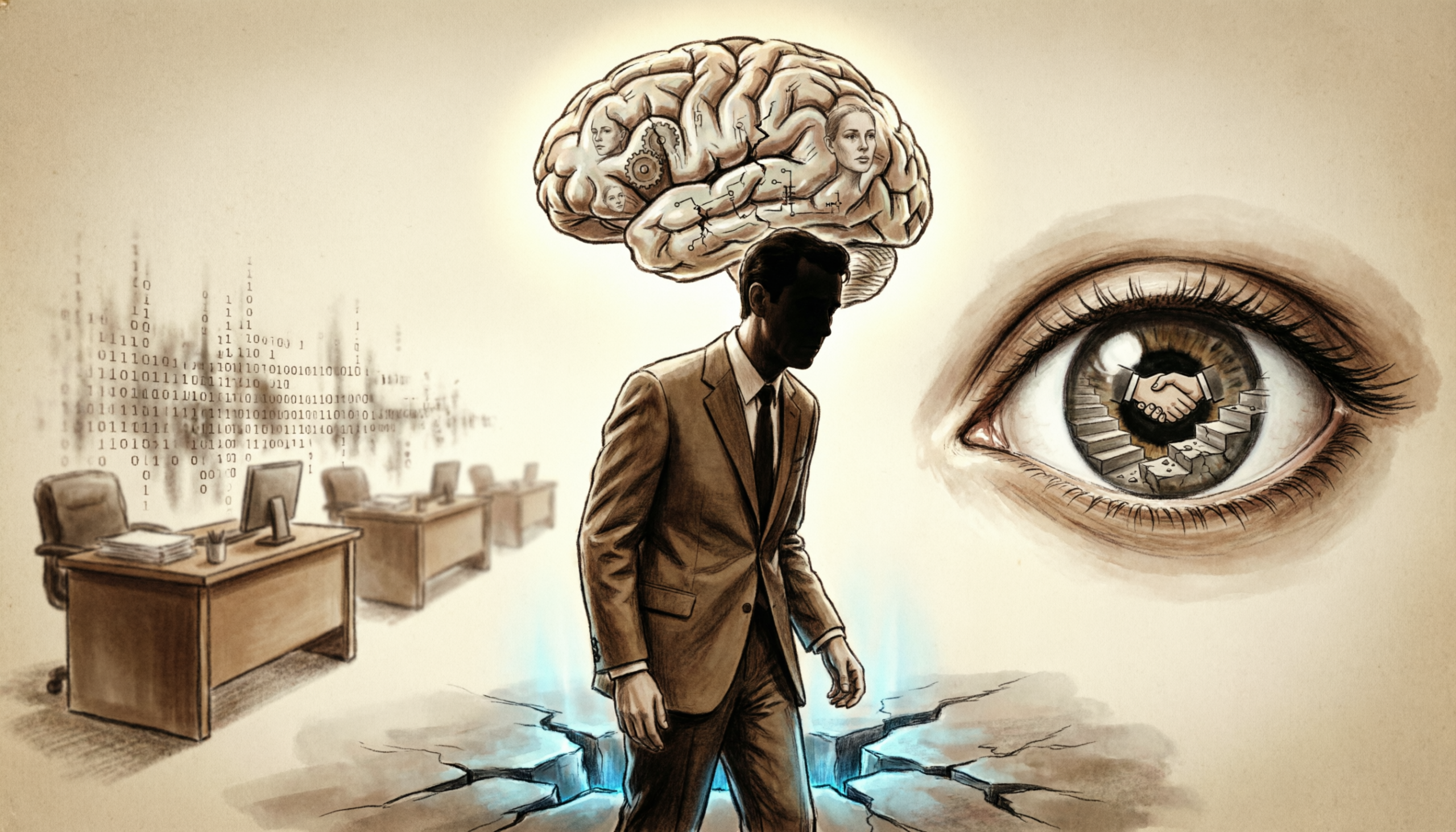
The common assumption is that fear makes people work harder. Sometimes it does, briefly. But chronic insecurity usually comes with a cognitive tax.
When people feel replaceable, they often become more risk-averse, less creative, and more focused on impression management. They may say less in meetings, hoard information, overwork in unproductive ways, or spend mental energy trying to look indispensable rather than actually becoming more effective.
That matters because AI-era work often rewards experimentation. The cruel irony is that insecurity can make people less able to do the very things that help them adapt.
It can also distort relationships at work. Colleagues start to look like competitors. Collaboration becomes guarded. Leaders who communicate poorly create rumor-rich environments, and rumor is basically anxiety with a social life.
What actually helps psychologically
There is no motivational hack that makes structural uncertainty disappear. If an industry is changing, reassurance alone is not enough. But there are better and worse ways to respond.
Shift from total control to influence
One of the fastest ways to intensify anxiety is to demand certainty where none exists. A more useful question is not, How do I guarantee my role is safe? It is what can I influence in the next six months?
That might mean learning the AI tools reshaping your field, but it can also mean strengthening the parts of your value that are harder to automate: judgment, client trust, conflict management, cross-functional thinking, taste, leadership, and context-sensitive decision-making. AI can generate outputs. It does not automatically generate credibility.
Separate your job from your identity
This is psychologically hard and increasingly necessary. If your entire self-worth sits inside your role, every technological shift becomes a referendum on your value as a person. That is too much pressure for any labor market to carry.
A healthier stance is to treat work as one expression of your capabilities, not the final proof of them. Skills can become less marketable. That hurts. It does not mean you have become less human, less intelligent, or less worthy of respect.
Get concrete fast
Vague fear thrives in vague thinking. Ask more specific questions. Which tasks in my role are most exposed? Which are augmented rather than replaced? What skills are adjacent to what I already do? What evidence do I actually have about the direction of this workplace?
Specificity does not magically make the news better, but it reduces helplessness. It turns ambient dread into a problem you can assess.
Watch for nervous system overload
A lot of AI-related job anxiety is discussed as if it were purely cognitive. It is not. People feel it in the body: restless sleep, irritability, compulsive scrolling, concentration problems, and a shortened fuse. If you are constantly consuming alarming predictions about automation, your nervous system may be reacting as if the threat is immediate and total.
That does not mean ignoring reality. It means regulating your exposure so you can think clearly enough to respond. The Psychology of Everything exists partly for this reason – to cut through hype, pseudo-certainty, and fear spirals so people can understand what is actually happening inside their own minds.
The bigger truth people miss
The fear surrounding AI is not only about machines becoming more capable. It is about humans living in systems where worth is often measured too narrowly. If people had stronger safety nets, healthier identities, and less pressure to equate productivity with dignity, AI would still be disruptive – but it would be less psychologically brutal.
That is the deeper lesson here. Technology exposes existing vulnerabilities. It does not create all of them from scratch.
If AI is making you question your future, do not rush to label yourself resistant, weak, or behind. You may be having a very normal human reaction to uncertainty, status threat, and identity disruption. The useful move is not denial or panic. It is becoming more accurate about what you are afraid of, and more deliberate about what kind of value you want to build next.
The people who adapt best are not always the least afraid. They are often the ones who understand their fear well enough to stop letting it do all the thinking.