
- What is industrial-organizational psychology in practice?
- Why this field matters more than people realize
- What industrial-organizational psychologists actually do
- The key topics inside I-O psychology
- How it differs from HR
- Common myths about industrial-organizational psychology
- Who should care about this field?
- Is industrial-organizational psychology a good career path?
Most people think psychology is about therapy, trauma, or relationships. Then they hear the question, what is industrial-organizational psychology? – and realize psychology also shapes job interviews, performance reviews, burnout, leadership, and whether a workplace brings out the best in people or slowly drains them.
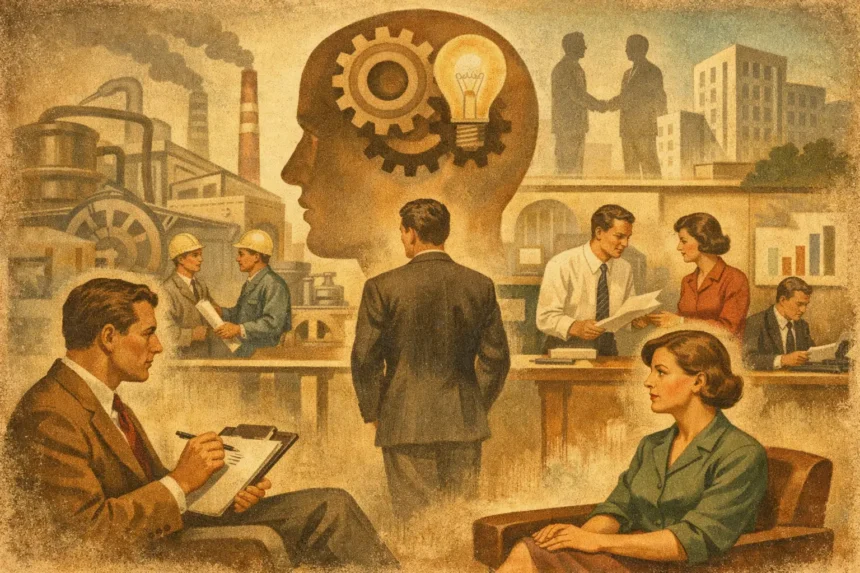
Industrial-organizational psychology, often shortened to I-O psychology, is the scientific study of human behavior at work. It looks at how people think, feel, perform, cooperate, lead, and make decisions in organizational settings. In plain English, it asks a very modern question: how do you build workplaces that actually work for humans instead of just extracting effort from them?
That sounds broad because it is. I-O psychology sits at the intersection of psychology, business, and data. It draws on research methods, personality science, motivation theory, social psychology, and behavioral measurement to solve practical workplace problems. Think hiring the right people, reducing turnover, designing fair assessments, improving team dynamics, and understanding why some managers elevate performance while others quietly destroy it.
What is industrial-organizational psychology in practice?
The easiest way to understand I-O psychology is to split it into its two halves.
The industrial side focuses on the structure of work. That includes job analysis, recruitment, employee selection, training, and performance measurement. If a company wants to know what skills a role actually requires, how to assess candidates fairly, or whether its interview process predicts success, that falls into the industrial side.
The organizational side focuses on the human system around the job. That includes motivation, leadership, culture, communication, job satisfaction, conflict, stress, engagement, and change management. If a workplace wants to know why morale is low, why trust is eroding, or why high performers are leaving, that is organizational psychology territory.
In reality, the two overlap constantly. A bad hiring system affects team culture. A toxic culture affects performance. Weak leadership increases stress, which in turn affects retention, which then affects recruitment. Work is a system, and I-O psychology studies the system without losing sight of the individual.

Why this field matters more than people realize
Work is one of the biggest psychological environments in adult life. It shapes identity, self-esteem, stress levels, social status, financial security, routine, and even mental health. Yet many workplaces remain built on intuition, tradition, or management trends presented as science.
That is where I-O psychology becomes useful. It cuts through myths and pseudo-science by asking: what does the evidence actually show? Not what feels persuasive in a leadership seminar. Not what sounds productive on LinkedIn. What reliably predicts better hiring, healthier teams, stronger motivation, and fairer systems?
For example, many people assume confidence in an interview equals competence on the job. It often does not. Some of the most charismatic candidates are simply better performers in social evaluation settings. I-O psychology is interested in building methods that predict real performance, not just polish.
The same goes for motivation. Companies often treat motivation as a personality issue, as if unmotivated employees are just flawed individuals. But motivation is heavily shaped by context. If goals are unclear, managers are inconsistent, rewards feel arbitrary, and workloads are unrealistic, motivation drops for understandable reasons. That is not a weakness. That is psychology.
What industrial-organizational psychologists actually do
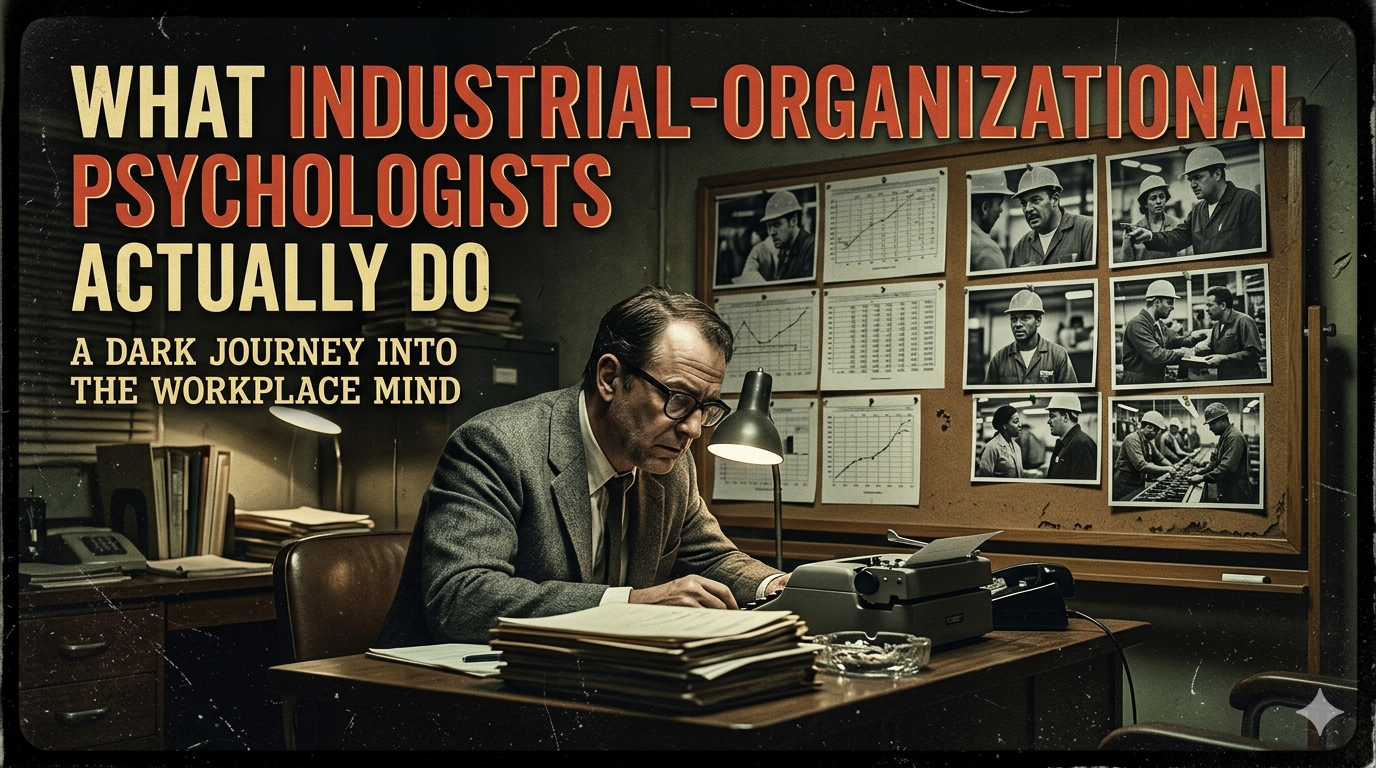
I-O psychologists work in universities, corporations, consulting firms, government agencies, and HR-related roles. Some are researchers. Others are deeply applied.
Their day-to-day work might involve designing employee surveys, validating hiring assessments, studying turnover, improving leadership development programs, analyzing workplace bias, or helping organizations manage change. They may use statistics, interviews, behavioral observation, and psychological testing to understand what is happening beneath surface-level problems.
A company might say, “We have a retention problem.” An I-O psychologist will usually ask better questions before offering answers. Which employees are leaving? At what point in the job cycle? Under which managers? Are exit patterns tied to workload, promotion bottlenecks, poor fit, weak onboarding, or pay inequity? That is one reason the field is valuable – it treats workplace problems as things to investigate, not just react to.
The key topics inside I-O psychology
A beginner’s guide to I-O psychology should make one thing clear: this is not a niche subfield about office productivity hacks. It covers some of the most important questions in modern working life.
Selection and hiring are a major part of the field. I-O psychologists study which hiring tools are valid, fair, and predictive. They care about whether interviews are structured, whether tests measure relevant abilities, and whether selection systems unintentionally disadvantage certain groups.
Training and development is another core area. That includes how people learn at work, what makes training effective, and why many corporate learning programs are forgettable theater rather than behavior change.
Motivation and performance are central. Researchers examine what drives effort, persistence, and satisfaction. They also look at feedback, goal-setting, incentives, and the conditions that help people do meaningful work well.
Leadership is huge. I-O psychology studies what effective leaders actually do, how trust develops, and why some leadership styles work in one context but fail in another. There is rarely a single ideal leadership type. It depends on the task, the team, the culture, and the moment.
Workplace well-being has also become more prominent. Stress, burnout, psychological safety, work-life boundaries, and employee mental health are now impossible to separate from organizational performance. A workplace can hit targets while damaging people, at least for a while. I-O psychology is interested in that trade-off and whether it is sustainable.
How it differs from HR
This is where beginners often get confused. Industrial-organizational psychology overlaps with human resources, but it is not the same thing.
HR is a broad business function that handles hiring, policies, benefits, compliance, employee relations, and organizational procedures. I-O psychology is a scientific discipline focused on understanding and improving workplace behavior through research and evidence-based methods.
In practice, some people with I-O training work in HR, and good HR teams often use I-O principles. But the mindset is different. HR often has to solve immediate organizational needs. I-O psychology asks whether the solution is actually valid, fair, and likely to work.
That distinction matters. Plenty of workplace practices exist because they are familiar, not because they are effective.
Common myths about industrial-organizational psychology
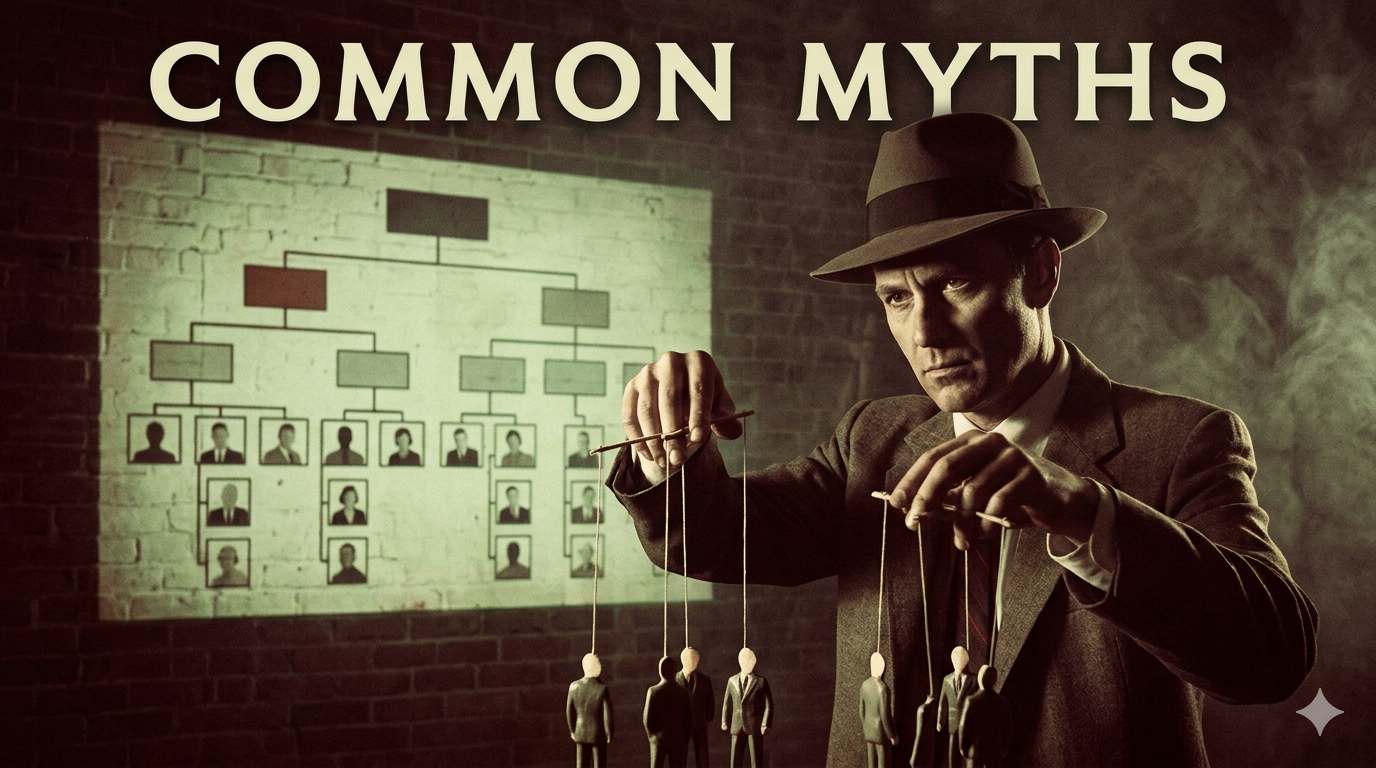
Myth #1: The Mind Reader Myth (I-O as Clinical Psychology)
Myth #2: The Hidden Strings Myth (I-O as Coercive Control)
Myth #3: The Personality Trap (I-O as Pseudoscience)
Myth #4: The Surveillance State (I-O as Big Brother)
One myth is that it is just “psychology for corporations.” That is too simplistic. Yes, organizations use it to improve performance. But the field also examines fairness, employee well-being, bias, job satisfaction, and whether systems treat people intelligently and ethically.
Another myth is that it is only for big companies. Smaller businesses often need these insights just as much, especially when early hiring mistakes, poor leadership habits, or unclear roles can shape culture fast.
A third myth is that it produces one-size-fits-all answers. It does not. Workplace behavior is highly context-dependent. A performance incentive that energizes one team may backfire in another. Remote work helps some people focus and thrive, while others become isolated and disengaged. I-O psychology is evidence-based, but real application still requires judgment.
Who should care about this field?
If you are a manager, founder, team leader, recruiter, or anyone trying to understand why people behave the way they do at work, this field is relevant to you. It is also useful if you are an employee who wants a clearer lens on workplace dynamics.
A lot of frustrating work experiences start to make more sense through an I-O lens. Why vague expectations create anxiety. Why unfair processes damage trust faster than leaders realize. Why talented people underperform in poorly designed systems. Why culture is not free snacks and slogans, but the daily pattern of what gets rewarded, ignored, and tolerated.
If you are interested in psychology because you want practical insight into real life, I-O psychology deserves more attention than it usually gets. It is one of the clearest examples of psychology moving beyond theory and into the environments that shape people every day.
Is industrial-organizational psychology a good career path?
For the right person, yes. It tends to suit people who like both human behavior and analytical thinking. You need curiosity about people, but also a willingness to work with data, research design, and messy organizational realities.
It is not the same as being a therapist, and that surprises some beginners. Most I-O psychologists do not treat individual mental health conditions. They are studying systems, patterns, assessments, team processes, and organizational effectiveness.
That makes it appealing for people who want to use psychology in business, consulting, people analytics, leadership development, or organizational research. But as with most careers, the fit depends on whether you enjoy balancing scientific rigor with practical constraints. Organizations often want quick fixes. Good psychology rarely works that way.
The most useful thing to remember is this: workplaces are not just economic systems. They are psychological systems. They shape attention, identity, stress, belonging, ambition, and behavior in ways people often underestimate. Industrial-organizational psychology matters because it helps us see work more clearly – and once you see the hidden forces behind performance, burnout, motivation, and culture, it becomes much harder to accept bad workplace myths at face value.