
- What the psychology of human behaviour actually studies
- Why people don’t always do what they say
- Emotion is not the enemy of reason
- Habits, rewards, and the hidden power of repetition
- Social behaviour is never just individual
- Bias, shortcuts, and why smart people still misread reality
- What changes behavior in real life
You tell yourself you’ll go to bed early, then somehow it’s midnight, and you’re watching one more video. You know a text was probably harmless, yet you still read a cold tone into it. You want to save money, eat better, and stay calm in conflict, but real life keeps exposing a gap between intention and action. The psychology of human behaviour lives in that gap.
That phrase sounds broad because it is. Human behaviour is shaped by biology, emotion, learning, social pressure, memory, identity, and the environment around us. The mistake people often make is looking for a single cause. There usually isn’t one. Most of what we do is the result of several systems working at once, often outside conscious awareness.
If you want to understand yourself or other people more clearly, it helps to stop asking, “Why did they do that?” as if there must be one clean answer. A better question is, “What forces were probably influencing that behavior in that moment?” That shift moves you closer to how psychology actually works.
What the psychology of human behaviour actually studies
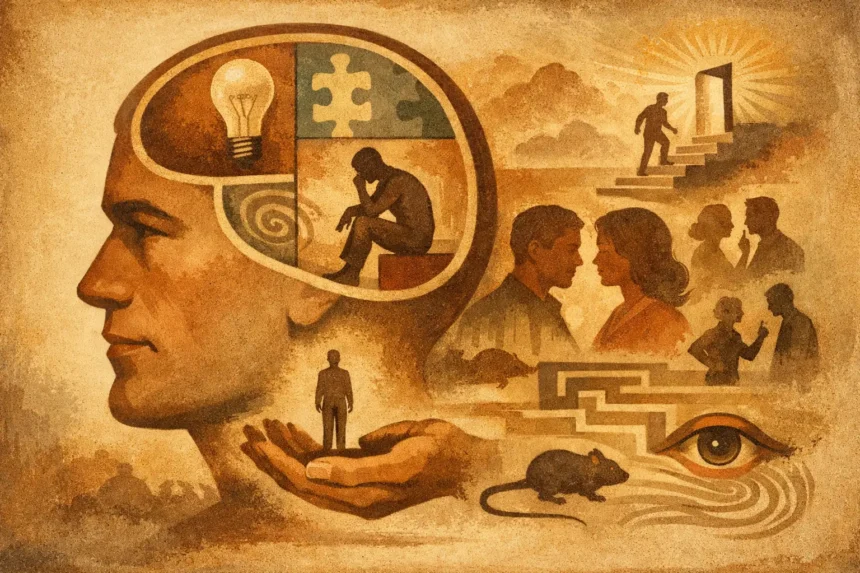
At its core, psychology looks at how people think, feel, and act – and how those three processes affect each other. Thoughts can trigger emotions. Emotions can shape choices. Repeated behaviors can become habits, which then start running with very little conscious effort.
This is why behaviour is not just about personality. Personality matters, but it is only one layer. Context matters just as much, and sometimes more. A patient person can become reactive when sleep-deprived. A generous person can turn guarded under financial stress. A confident person can look indecisive when the social stakes feel high.
That does not mean people are fake or inconsistent. It means behaviour is conditional. Psychologists have known for decades that stable traits exist, but so do situational pressures. If you ignore either one, your explanation will be too neat to be useful.
Why people don’t always do what they say
One of the most revealing ideas in the psychology of human behaviour is that the mind is not fully transparent to itself. People like to believe they understand their motives, but introspection is limited. We often explain our actions after the fact rather than observing their true causes in real time.
This helps explain a familiar pattern: values on paper, different behavior in practice. Someone says health matters, but keeps stress eating. Another says they want a calm relationship but escalates every disagreement. That does not always make them hypocrites. Sometimes it means short-term reward, emotional regulation, and learned habits are overpowering long-term goals.
The brain is constantly balancing immediate comfort against future benefit. And immediate comfort is persuasive. It reduces tension now. Future benefit is abstract. It asks for patience, effort, and uncertainty. That is why people can genuinely want change while repeatedly avoiding the behaviors that produce it.
Emotion is not the enemy of reason
A lot of popular culture treats emotion as the thing that messes up rational thinking. Psychology paints a more interesting picture. Emotion is not just noise in the system. It is part of the system.
Emotions help us prioritize. They signal threat, reward, connection, injustice, loss, and opportunity. Without emotion, decision-making becomes harder, not easier. People need emotional input to know what matters.
The problem is not that emotions exist. The problem is when emotions become the only data source. Anxiety can make uncertainty feel like danger. Anger can turn ambiguity into proof of bad intent. Attraction can make red flags look minor. In each case, the emotion is giving information, but not always a complete picture.
This is where self-awareness becomes practical rather than performative. You do not need to suppress emotion. You need to get better at asking, “What is this feeling telling me, and what might it be distorting?”
Habits, rewards, and the hidden power of repetition
Much of human behaviour is less dramatic than people think. It is not driven by grand beliefs. It is driven by repetition. We become what we repeatedly do, especially when those actions are linked to some form of reward.
Habits form because the brain likes efficiency. If a behavior solves a problem, reduces discomfort, or creates pleasure, the brain starts building a shortcut. Over time, the cue alone can trigger the routine. That is why you can reach for your phone without deciding to. It is also why changing a habit is rarely about willpower alone.
The environment matters here more than people want to admit. Visible snacks get eaten. Phones within reach get checked. Friction changes behavior. Make something easier, and it happens more. Make it harder, and it happens less. This sounds obvious, but it is one of the most underused insights in everyday self-improvement.
When people fail to change, they often blame character. More often, the system around them is still rewarding the old pattern.
Social behaviour is never just individual
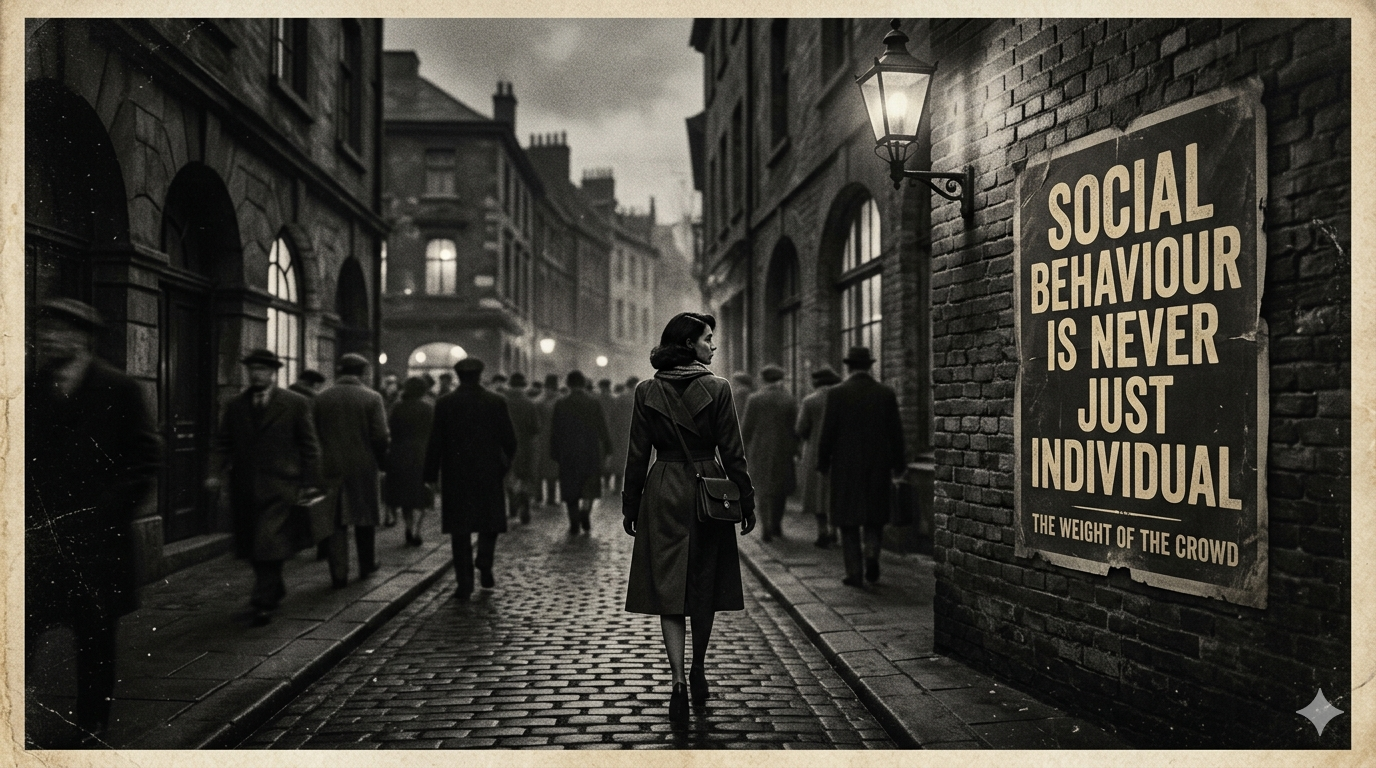
Humans are social learners. We copy, compare, conform, perform, and react to status cues constantly. A huge amount of behaviour that feels personal is actually social.
This includes opinions. People like to think they arrive at beliefs through pure reasoning, but belonging plays a major role. We are more likely to accept information that fits our group identity and more likely to reject information that threatens it. That does not only happen in politics. It happens in wellness culture, workplaces, friendships, and relationships.
Social pressure is not always explicit. Often it is subtle: what gets rewarded, what gets laughed at, what gets ignored, who seems high status, and what appears normal. The result is that people can slowly adapt their behavior without noticing they are doing it.
This is one reason online life has such a strong psychological effect. Digital spaces intensify comparison, reward quick reactions, and amplify identity signaling. The behaviour you see there is real, but it is also shaped by metrics, attention incentives, and audience awareness. People do not just express themselves online. They perform under conditions that change what expression looks like.
Bias, shortcuts, and why smart people still misread reality
The human mind uses shortcuts because it has to. There is too much information and too little time. These shortcuts, often called heuristics, help us function efficiently. But they also create predictable errors.
We notice evidence that confirms what we already suspect. We remember vivid stories more easily than dry statistics. We assume other people’s mistakes reflect their character, while our own mistakes reflect circumstances. None of this means people are irrational all the time. It means rationality is limited by attention, memory, motivation, and emotion.
This matters because intelligence does not cancel bias. In some cases, smart people get better at defending their existing views rather than questioning them. Knowledge can improve judgment, but only if it is paired with intellectual humility.
A more accurate model of human behavior is not “people are logical” or “people are irrational.” It is that people are meaning-making creatures trying to navigate complexity with imperfect tools.
What changes behavior in real life
Insight helps, but insight alone is overrated. People can understand a pattern and still keep repeating it. Real change usually happens when awareness is paired with different cues, different rewards, and different interpretations.
If you want to change a behavior, it helps to look at three levels at once. First, what triggers it? Second, what reward is it providing, even if that reward is unhealthy? Third, what identity is wrapped up in it? A habit that relieves stress, fits your routine, and feels tied to who you are will not shift because of one good podcast episode.
This is also why shame tends to fail as a behavior-change strategy. Shame narrows attention and increases threat. It can produce short-term compliance, but it often makes honest self-observation harder. Curiosity works better. It creates enough distance to notice patterns without instantly defending them.
That is part of what makes psychology useful when it is done well. It does not reduce people to labels or excuses. It helps you see the mechanisms clearly enough to interrupt them.
You are not just your impulses, and you are not fully separate from them either. Behaviour sits at the intersection of what you feel, what you have learned, what your environment rewards, and what your mind is trying to protect. The more accurately you can see those forces, the less mysterious your choices become – and the more intentional your next ones can be.