

- What “snakes in suits” really means
- Why dark traits in corporate leadership can look like talent
- The warning signs are usually social before they are operational
- Why companies keep rewarding them
- Not every tough leader is toxic
- How to protect yourself if you work for one
- What better leadership selection looks like
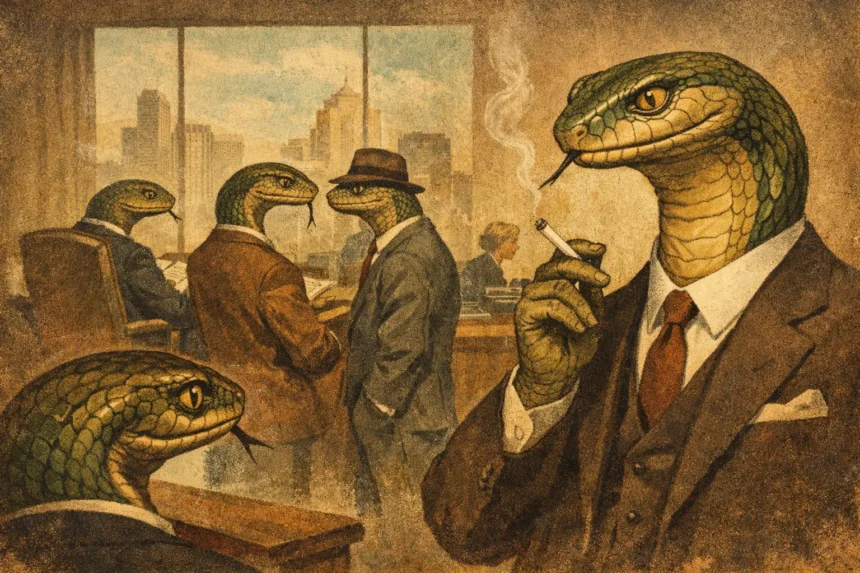
A leader who charms the room, speaks with total confidence, and seems strangely untouched by guilt can look impressive at first. That is part of why the phrase “snakes in suits”: dark traits in corporate leadership still lands so hard. It captures a disturbing truth from organizational psychology: some of the people who rise fastest are not the wisest, kindest, or most competent. They are simply better at performing leadership while pursuing power.
This is not about calling every difficult boss a psychopath. It is about understanding a cluster of dark personality traits that can thrive in status-driven systems. When we miss the psychology, we often mistake intimidation for strength, manipulation for strategy, and emotional coldness for executive toughness.
What “snakes in suits” really means
The idea behind Snakes in Suits came from work on psychopathy in business settings, but the broader conversation now includes what psychologists often call the Dark Triad: Narcissism (Grandiosity), Machiavellianism (Manipulation), Psychopathy (Callousness), and Sadism (Cruelty). These are distinct traits, yet they overlap in ways that matter at work.
Narcissism centers on grandiosity, entitlement, and a strong need for admiration. Machiavellianism is more strategic – calculating, deceptive, and focused on using people as instruments. Psychopathy, in its subclinical form, includes callousness, low empathy, impulsivity, and a reduced fear response. Sadism involves finding pleasure or gratification in the suffering of others. Not every corporate operator with sharp elbows fits all four. But when these traits cluster together, leadership can become dangerous in ways that are hard to spot early.
Part of the confusion comes from cultural myths about success. We often celebrate boldness, certainty, and dominance. In moderation, those qualities can be useful. But dark traits mimic leadership competence without delivering the substance underneath. That is the trick.
Why dark traits in corporate leadership can look like talent
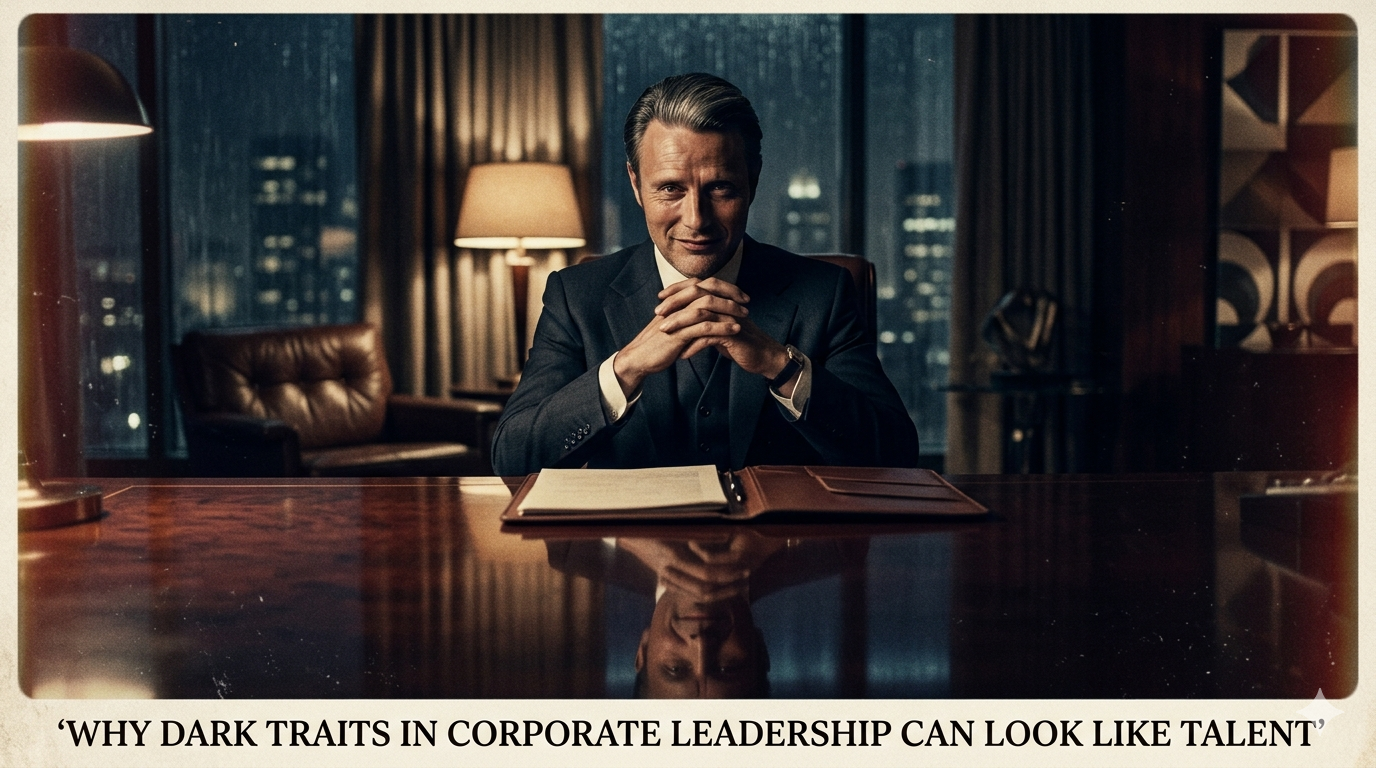

Organizations rarely promote people after a formal empathy test. They promote visibility, confidence, persuasion, and results. That creates an opening for people who know how to impress upward while managing perceptions.
A narcissistic leader may come across as visionary because they speak in large, compelling narratives. A Machiavellian manager may seem politically savvy because they know exactly who to flatter, who to sideline, and when to shift blame. A psychopathic executive may look calm under pressure because they feel less anxiety and less emotional conflict than others do.
This is where psychology gets uncomfortable. Traits that are destructive in the long run can be adaptive in short-term corporate contests. If your environment rewards self-promotion more than collaboration, or spectacle more than substance, dark personalities gain an edge.
There is also a basic attribution error at play. People tend to infer competence from confidence. We assume the person who sounds certain knows what they are doing. In reality, confidence and accuracy are only loosely connected. Some leaders are secure because they are capable. Others are secure because doubt barely registers.
The warning signs are usually social before they are operational
By the time results clearly fall apart, a dark-trait leader has often already done a lot of damage. Morale drops. Trust erodes. Good people leave quietly. Teams become more political, more fearful, and less creative.
The early warning signs are often relational. Watch how the person treats people who cannot benefit them. Notice whether they take responsibility when things go wrong or whether they move instantly into blame management. Pay attention to patterns of charm followed by devaluation. That cycle matters.
Another clue is emotional asymmetry. Many toxic leaders demand loyalty, admiration, and flexibility from others while offering little reciprocity. They want understanding for their pressure, but show no interest in yours. They frame exploitation as high standards.
Common patterns of “snakes in suits” behavior
One pattern is impression management. These leaders are often excellent in interviews, presentations, and high-stakes meetings. They know how to read status cues and mirror what influential people want to hear.
Another is selective aggression. They may appear polished with senior leaders and abrasive with peers or direct reports. This split reputation is one reason they survive so long. People above them see confidence. People below them see volatility.
A third pattern is moral flexibility. Rules are treated as tools, not principles. If something helps them win, the ethical line suddenly becomes negotiable, then invisible.
Why companies keep rewarding them
The short answer is that organizations are not neutral. They amplify whatever they measure.
If a company obsesses over quarterly wins, rewards internal competition, and treats burnout as commitment, it can accidentally select for darker personalities. A leader willing to overpromise, intimidate, and take credit may outperform a more ethical colleague in the short run, especially if the real costs are delayed.
Boardrooms and senior teams are also vulnerable to what psychologists call halo effects. A person who looks articulate, decisive, and charismatic can be assumed to possess judgment, integrity, and depth. Those are different things. We routinely bundle them together because it is cognitively efficient.
Then there is the problem of fear. Employees often recognize troubling patterns long before leadership does, but speaking up is risky. Dark-trait leaders can be highly retaliatory, especially when their image is threatened. That creates silence, and silence gets misread as stability.
Not every tough leader is toxic
This distinction matters. Strong leaders can make unpopular decisions, hold people accountable, and stay emotionally composed without having dark traits. The difference is not whether they are demanding. It is how they use power.
A healthy, high-standard leader is usually capable of remorse, reflection, and course correction. They can hear dissent without treating it as betrayal. They do not need to humiliate others to establish authority. Their confidence is grounded in competence, not constant domination.
By contrast, a dark-trait leader often experiences feedback as a narcissistic injury or a strategic threat. They may punish honesty, rewrite history, or intensify control. The issue is not mere ambition. It is an ambition unrestrained by empathy and ethics.
How to protect yourself if you work for one
There is no perfect script, because context matters. Your job security, seniority, and company culture all shape what is realistic. Still, psychology offers a few useful principles.
Document patterns, not just incidents. Toxic leaders often create plausible deniability around each event, but the pattern tells the real story. Keep your communication clear and professional. Avoid feeding unnecessary personal information to someone who weaponizes vulnerability.
It also helps to reality-check your experience with trusted colleagues. Dark-trait leaders are good at making people doubt themselves. If multiple people independently report the same manipulation, inconsistency, or intimidation, that is data.
If you can, build lateral alliances and maintain visibility beyond the toxic leader. Isolation increases your risk. So does overinvesting in the hope that if you just perform better, the behavior will stop. Sometimes it improves. Often it does not, because the behavior is not about your performance. It is about their psychology.
And yes, sometimes the healthiest move is to leave. That is not a weakness. It is recognizing that chronic exposure to coercive leadership can damage sleep, confidence, concentration, and mental health.
What better leadership selection looks like
If companies want fewer snakes in suits, they need to stop mistaking charisma for character. That means looking beyond polished interviews and heroic self-narratives.
Better systems examine how a person has treated peers, not just whether they impressed superiors. They value 360-degree feedback, patterns of team retention, ethical judgment, and the ability to develop others. They also create cultures where disagreement is not career suicide.
There is no foolproof filter. Dark-trait individuals can be socially skilled and strategically patient. But environments with real accountability make it harder for them to thrive. Culture is not a slogan. It is a selection system.
At The Psychology of Everything, this is the part we should care about most: dark traits are not just interesting labels for difficult personalities. They shape the daily emotional climate of workplaces, the quality of decisions, and the kind of people who get rewarded. If we want healthier organizations, we need sharper psychological literacy about who looks like a leader and who actually is one.
The most reliable sign of good leadership is not how much power someone can gather around themselves. It is what happens to other people in their presence – whether they become smaller, more anxious, and more silent, or clearer, stronger, and more capable.