
- Introvert vs social anxiety: the core difference
- What introversion actually looks like
- What social anxiety actually looks like
- Why they get confused so often
- The signs that help you tell them apart
- Can you be both introverted and socially anxious?
- When quietness is healthy, and when it is a warning sign
- What helps if it is social anxiety
Some people leave a party feeling pleasantly done. Others leave replaying every sentence, convinced they said something embarrassing. From the outside, both can look quiet, reserved, or hard to read. But introvert vs social anxiety is not a personality showdown. It is the difference between how you naturally recharge and how much fear is shaping your behavior.
That distinction matters more than most people realize. Quietness gets flattened into one stereotype, and the result is confusion. Introverts get mislabeled as anxious. People with social anxiety get told they are just shy or need to “come out of their shell.” Psychology gives us a cleaner framework.
Introvert vs social anxiety: the core difference
Introversion is a personality trait. Social anxiety is a mental health condition. That sounds simple, but the overlap in behavior is what throws people off.
An introvert tends to lose energy from too much social stimulation and regain it in lower-stimulation environments, often alone or with a small number of trusted people. That does not mean they dislike people. It means social interaction can be mentally taxing, especially when it is loud, prolonged, or performative.
Social anxiety, by contrast, centers on fear. More specifically, fear of negative evaluation, embarrassment, rejection, or being judged. Someone with social anxiety may want connection and even crave it, but avoid situations because they feel threatening. The issue is not just energy depletion. It is distress.
A useful shortcut is this: introversion is about preference, while social anxiety is about fear and avoidance. Preferences can be flexible. Fear tends to narrow your life.

What introversion actually looks like
Popular culture has done introverts few favors. The term gets used as a catch-all for anyone quiet, awkward, antisocial, thoughtful, or bad at networking. None of that is accurate by default.
In personality psychology, introversion is usually understood as part of a broader spectrum, often paired with extraversion. Introverts typically prefer less external stimulation. They may enjoy deeper conversations over small talk, smaller groups over crowds, and reflective time over constant activity.
Crucially, introversion is not a dysfunction. It does not require treatment. It is not a problem to solve unless someone is suffering because of how they relate to it. An introvert can be socially skilled, confident, funny, and professionally effective. They may give a great presentation, then need a quiet evening afterward. That is not anxiety. That is a regulation.
This is where context matters. A person who avoids happy hour after a long workday may simply be at capacity. A person who skips it because they are terrified of sounding stupid or being scrutinized may be dealing with something else.
What social anxiety actually looks like
Social anxiety disorder involves intense fear in social or performance situations where a person feels exposed to possible judgment. The classic examples include public speaking, meeting new people, eating in front of others, dating, speaking up in meetings, or even making eye contact.
The emotional pattern usually includes anticipatory anxiety before the event, distress during it, and rumination afterward. That post-event replay can be brutal. People with social anxiety often overestimate how negatively they came across and underestimate how little other people noticed.
Behaviorally, social anxiety often leads to avoidance or what psychologists call safety behaviors. These are small strategies used to reduce perceived risk, such as rehearsing every sentence, checking your phone to avoid interaction, speaking very softly, avoiding eye contact, or leaving early. Safety behaviors can bring short-term relief, but they also keep the fear alive because the person never fully tests whether the situation is actually dangerous.
That is one of the clearest markers separating social anxiety from introversion. Introversion may shape where you feel most comfortable. Social anxiety starts dictating what feels possible.
Why they get confused so often
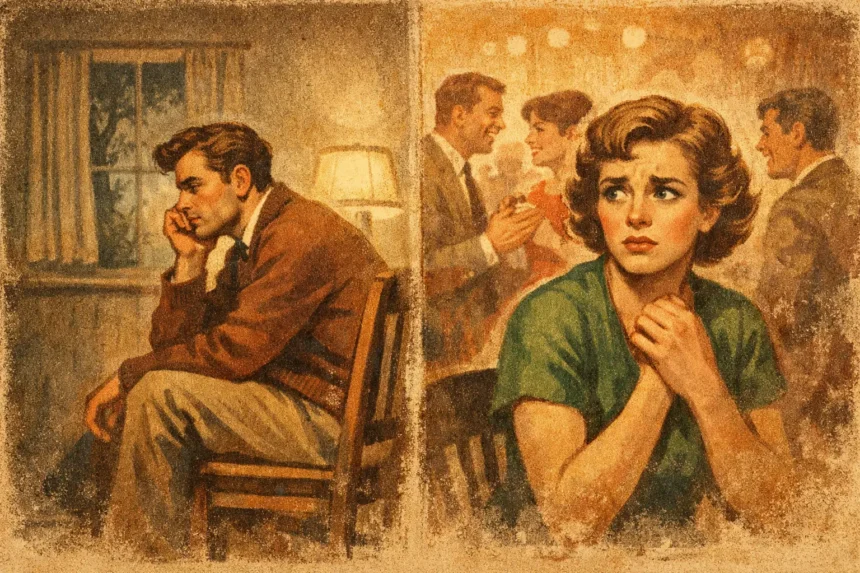
The confusion is understandable because both introverts and socially anxious people may appear quiet, reserved, and selective. Both may prefer smaller gatherings. Both may avoid being the center of attention.
But the same behavior can come from completely different psychology. Declining a party can mean “I need rest” or “I am scared of being judged.” Speaking less in a group can mean “I am thinking” or “I am terrified of saying the wrong thing.” From the outside, these look similar. Internally, they are not.
There is also a cultural bias underneath this. In many social and professional settings, extraversion gets treated like the default ideal. More outgoing is seen as more confident, more likable, more capable. That creates pressure for introverts to pathologize themselves and for anxious people to hide what they are experiencing.
The result is a lot of bad self-diagnosis. People assume, “I don’t love parties, so I must have social anxiety,” or “I get nervous around people, but I’m just introverted.” Both can miss the mark.
The signs that help you tell them apart
A useful question is not “Do I like being alone?” It is “What is driving my behavior?”
If you are introverted, solitude usually feels restorative. You may be selective socially, but connection with the right people still feels good. You are not necessarily afraid of interaction. You may just not want too much of it.
If you have social anxiety, solitude can feel safer, but not always satisfying. You might avoid the very interactions you want because the fear is too strong. You may spend a lot of time managing impressions, worrying about mistakes, and recovering from social situations that felt threatening.
Another clue is flexibility. Introverts can often stretch when needed. They may not love a big networking event, but they can get through it and move on. Social anxiety tends to produce more intense distress, stronger avoidance, and more lingering mental fallout.
Physical symptoms also matter. Social anxiety may come with blushing, sweating, shaking, nausea, rapid heartbeat, or a sense of panic in social settings. Introversion, by itself, does not usually trigger that kind of fear response.
Can you be both introverted and socially anxious?
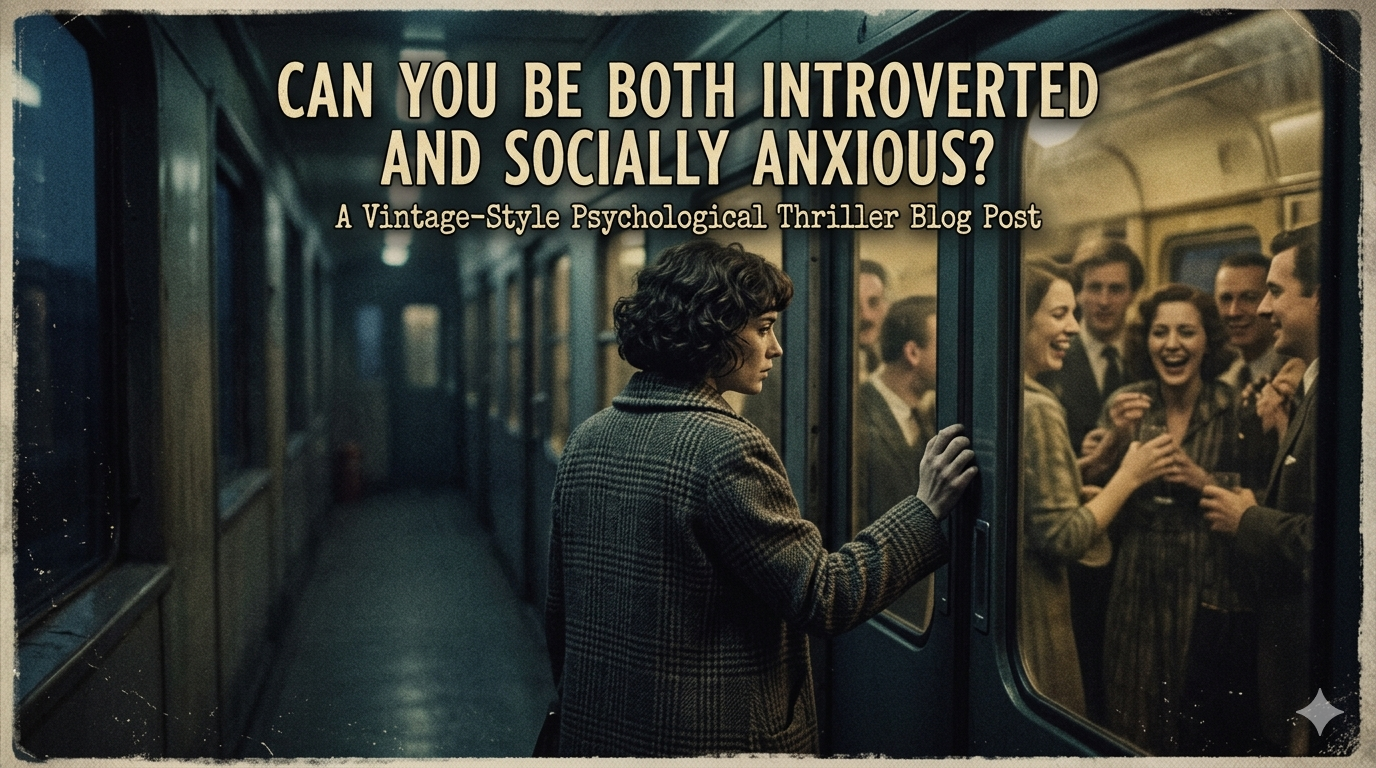
Absolutely. This is where real life gets more complicated than neat labels.
A person can naturally prefer low-stimulation environments and also fear social judgment. In fact, introverted people may sometimes have an easier time masking social anxiety because others expect them to be quiet anyway. Their avoidance can look personality-based when it is actually fear-based.
The reverse confusion also happens. An extroverted person can have social anxiety, too. They may love people, excitement, and conversation, yet still feel intense fear about being judged. This is one reason the introvert-social anxiety equation is so misleading. Anxiety does not care where you sit on the introversion-extraversion spectrum.
So the better question is not which label fits your identity best. It is whether fear is shrinking your life.
When quietness is healthy, and when it is a warning sign
Not every socially selective habit needs analysis. Some people genuinely do better with fewer plans, fewer people, and more mental space. That can be wise, not avoidant.
The warning sign is impairment. Are you turning down opportunities you actually want? Is fear interfering with relationships, work, dating, school, or everyday tasks? Do you spend excessive time worrying before and after ordinary interactions? Are you structuring your life around not being noticed?
If the answer is yes, this is less about temperament and more about anxiety. That does not mean something is wrong with your personality. It means your nervous system may be overpredicting social threat.
From a psychological perspective, that is good news. Traits are relatively stable. Anxiety is highly treatable.
What helps if it is social anxiety
The strongest evidence supports cognitive behavioral therapy, particularly approaches that target anxious thoughts, avoidance, and safety behaviors. Exposure matters here, but not in the cartoonish sense of forcing yourself into your worst nightmare. Effective exposure is structured, gradual, and focused on learning that discomfort is survivable and judgment is often less catastrophic than your mind predicts.
It also helps to challenge the hidden assumptions driving the fear. Social anxiety often runs on beliefs like “If I pause, people will think I’m stupid” or “If I blush, they’ll reject me.” Those beliefs feel true because anxiety makes them vivid, not because they are accurate.
For some people, medication can also be useful, especially when symptoms are severe or persistent. But the broader point is this: if fear is the engine, you do not need a new personality. You need a better strategy.
If you are simply introverted, the work looks different. It may involve setting boundaries, honoring your energy, and resisting the pressure to perform extroversion for approval. There is nothing psychologically superior about being the loudest person in the room.
The goal is not to become more socially acceptable to other people. The goal is to understand what is actually happening inside you.
That is the real value of getting introvert vs social anxiety right. One is a temperament to work with. The other is a fear pattern to treat. When you stop confusing the two, you stop solving the wrong problem – and that is often where real relief begins.