



That expensive subscription you forgot to cancel, the stock you refused to sell because it might bounce back, the sudden urge to buy something after a stressful week – this is behavioral finance: why humans are bad with money in real life. Most money mistakes are not caused by a lack of intelligence. They come from a brain built for survival, status, and short-term relief, not rational spreadsheets.
Money feels like a math problem, but it behaves more like a psychology problem. That is the uncomfortable insight at the center of behavioral finance. Classical economics assumes people make cool, logical decisions in their own best interest. Actual humans do something messier. We procrastinate, panic, copy other people, protect our egos, and tell ourselves stories that make bad decisions feel reasonable.
What behavioral finance actually explains
Behavioral finance sits at the intersection of psychology and economics. It studies how cognitive biases, emotions, and social pressures distort financial decisions. In other words, it explains why smart people overspend, underinvest, hold losing assets too long, and make different choices depending on how options are framed.
This matters because money decisions are rarely isolated. A bias that makes you keep one losing investment can also make you stay loyal to a budget that never worked, avoid checking your bank account, or chase a salary figure that looks impressive but leaves you burned out. The same mental shortcuts show up across saving, spending, debt, investing, and career decisions.
The core idea is not that humans are hopeless. It is that we are predictably irrational. Once you understand the pattern, you can design around it.
Behavioral finance: why humans are bad with money
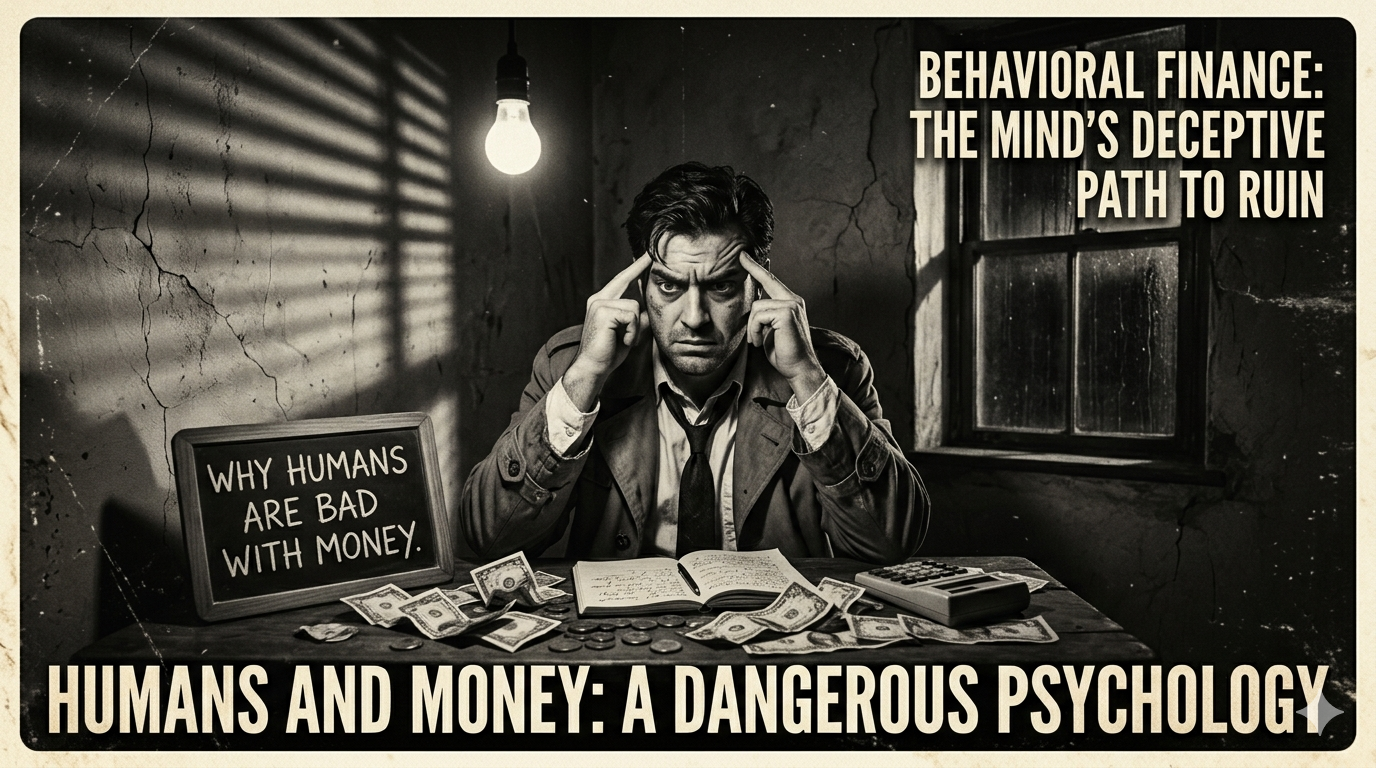

One of the biggest drivers is present bias. We give disproportionate weight to what feels good now and discount what helps later. A retirement contribution in 30 years feels abstract. Dinner delivery tonight feels vivid, deserved, and easy to justify. This is why people can genuinely want long-term stability and still make short-term choices that undermine it.
Loss aversion is another major culprit. Psychologically, losses tend to sting more than equivalent gains feel good. That sounds harmless until you see how it shapes behavior. People often hold bad investments because selling would force them to admit a loss. They may also avoid investing altogether because the possibility of losing money feels more emotionally powerful than the possibility of future growth.
Then there is overconfidence. Most people think they are above-average decision-makers, and that fantasy gets expensive fast. Overconfidence can show up as excessive trading, underestimating risk, or believing you can time the market because you read a few threads and had one lucky win. Confidence feels like competence, but they are not the same thing.
Mental accounting also quietly distorts everyday choices. We treat money differently depending on where it came from or what label we gave it. A tax refund feels like free money, even though it is your money. A bonus gets spent more casually than regular income. People may carry high-interest credit card debt while protecting a low-interest savings account because one bucket feels untouchable and the other feels urgent.
Social proof makes things worse. Humans are deeply imitative. If everyone around you seems to be buying property, trading crypto, upgrading cars, or booking expensive vacations, those choices start to feel normal rather than risky. Financial behavior is contagious, especially when it doubles as identity signaling.
And then there is the sunk cost effect, which traps people in failing financial decisions because they have already invested time, money, or pride. We keep paying for the gym membership we never use, holding the stock we should have sold months ago, or continuing with a business idea that is draining us because walking away feels like failure. In reality, sunk costs are gone either way. The only relevant question is what makes sense now.
Why knowing your biases is not enough
A lot of financial advice assumes insight automatically leads to change. It usually does not. You can know you are impulsive and still impulse buy. You can understand compound interest and still delay saving. Awareness helps, but friction, emotion, and habit often win.
That is because financial decisions are rarely made in calm, reflective conditions. They happen when you are tired, anxious, excited, socially influenced, or trying to repair your mood. Behavioral finance is less about teaching people to become perfectly rational and more about accepting that they will not.
The better question is: how do you make good choices easier when your brain is in one of its less impressive moods?
How to fix bad money behavior without becoming a robot
The most effective fix is not stronger willpower. It is a better system design.
Start by automating the decisions that matter most. Automatic transfers into savings, retirement, or debt repayment work because they remove the need for repeated self-control. Each manual decision is a chance for emotion to interfere. Automation turns a good intention into default behavior, and defaults are powerful.
Next, reduce the number of high-risk moments. If you overspend when bored or stressed, your problem is not just budgeting. It is emotional cue management. Remove saved card details from shopping apps. Put a 24-hour delay between wanting and buying. Unsubscribe from marketing emails that create artificial urgency. These changes sound small, but they interrupt the pathway between impulse and action.
It also helps to make future consequences feel more concrete. Present bias thrives on vagueness. Saving for someday is weak motivation. Saving for a three-month emergency fund, a move to a new city, or buying flexibility to leave a bad job is psychologically stronger. The human brain responds better to emotionally specific goals than to abstract virtue.
Reframing matters too. Instead of seeing budgeting as a restriction, treat it as pre-deciding what you want your money to do. Instead of asking, Can I afford this, ask, What am I giving up if I choose this? Opportunity cost is one of the clearest antidotes to mindless spending because it forces comparison. Every dollar spent closes off another option.
When investing, create rules before emotion enters the room. Decide in advance how much you will invest, how often, and under what circumstances you will sell. The market is a terrible place to improvise. Pre-commitment protects you from panic during downturns and from euphoria during bubbles.
The hidden role of identity in financial behavior
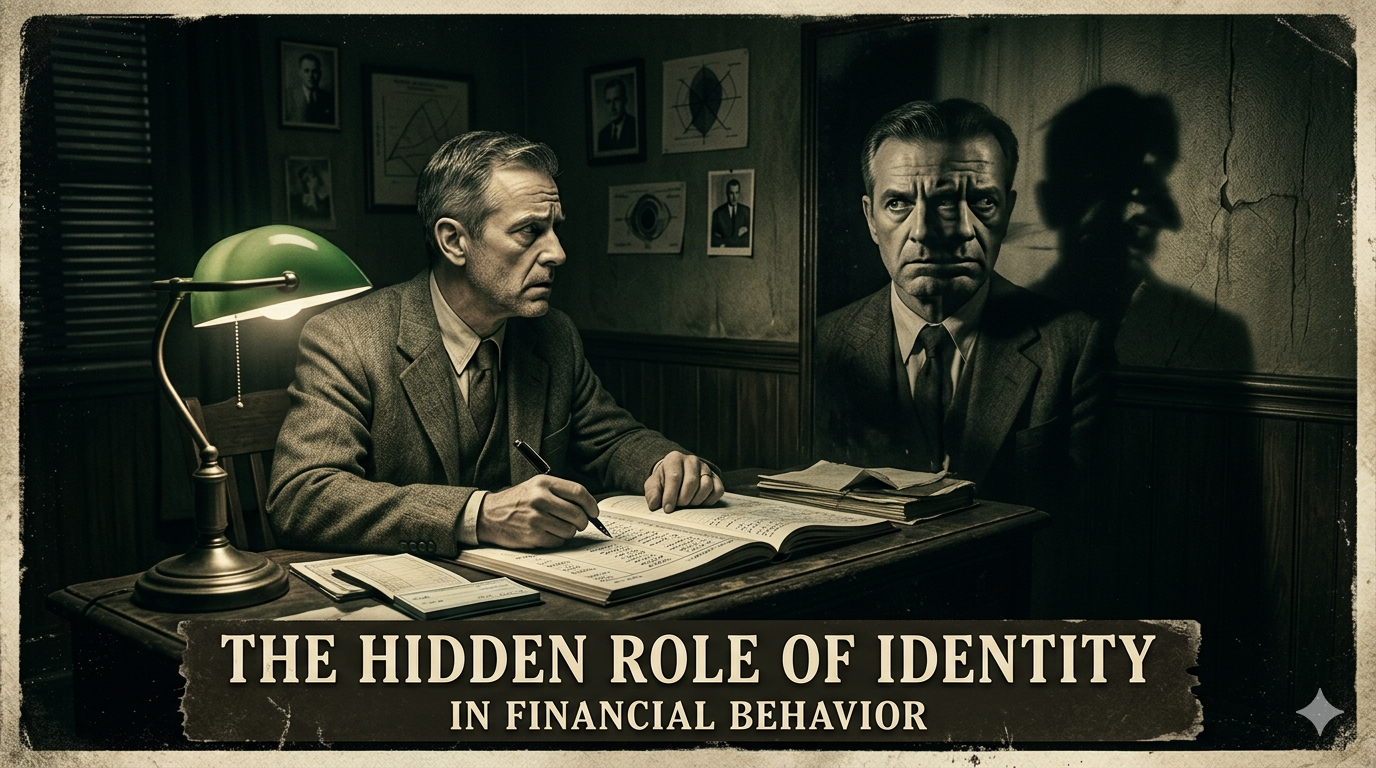
Many money habits are not really about money. They are about identity.
Some people overspend because spending supports a self-image: successful, generous, fun, sophisticated, unfazed. Others under-earn or avoid investing because wealth feels morally suspect, intimidating, or incompatible with how they see themselves. If your financial behavior keeps contradicting your stated goals, identity conflict is often part of the story.
This is where evidence-based psychology becomes more useful than generic money tips. If you think of yourself as bad with money, chaotic, or just not a numbers person, you are more likely to behave in ways that confirm that story. Self-concept becomes a script.
A better approach is to build an identity around process rather than perfection. You do not need to become the kind of person who always makes optimal choices. You need to become the kind of person who checks in, adjusts, and uses systems when emotions get loud. That is a far more durable identity because it leaves room for being human.
Better money decisions are usually boring
There is a reason flashy financial content spreads faster than sensible financial content. Certainty sells. Drama sells. The fantasy of a breakthrough moment sells. But most healthy money behavior is repetitive, unsexy, and slightly annoying.
It looks like automatically investing every month when nothing exciting is happening. It looks like sleeping on purchases. It looks like admitting you were wrong, cutting a loss, and moving on. It looks like setting up an environment where your future self does not have to be a hero.
That may sound underwhelming, but it is also liberating. If the problem were intelligence, many people would be stuck. If the problem is predictable human psychology, then progress is possible. You do not need a perfect brain. You need fewer chances for your worst instincts to run the show.
The real promise of behavioral finance is not that it turns you into a machine. It helps you cut through the myths and pseudo-science around money and see your behavior more clearly. And once you can see the pattern, you can finally stop blaming yourself for being human and start designing for it instead.