
- Why psychology myths survive
- Psychology myths debunked: what the evidence really shows
- Myth 1: You only use 10 percent of your brain
- Myth 2: People are either left-brained or right-brained
- Myth 3: Memory works like a video recording
- Myth 4: Opposites attract
- Myth 5: Venting anger helps you “get it out.”
- Myth 6: Trauma is always repressed and hidden from awareness
- Myth 7: Willpower is the main thing separating disciplined people from everyone else
- What these myths get wrong about human nature
- How to get better at spotting bad psychology
Much of poor self-understanding starts with a catchy idea. You hear that people are either left-brained or right-brained, that trauma is always repressed, or that using only 10% of your brain explains hidden potential. It sounds smart, it spreads fast, and it sticks. But when you look at the evidence, many of the most popular claims about human behavior fall apart. This is psychology myths debunked in the way it should be done – not with smug fact-checking, but with a clearer picture of what the science actually says.
The problem with psychology myths is not just that they are wrong. It is that they quietly shape how people interpret themselves and others. They influence hiring decisions, relationship advice, classroom expectations, mental health conversations, and the kind of content that gets rewarded online. Bad psychology does not stay in textbooks. It becomes everyday common sense.
Why psychology myths survive
Most myths survive because they do something useful. They simplify a complex reality, provide a quick label, or offer a satisfying explanation for behavior that is hard to understand—human beings like clean stories. Real psychology is often less tidy.
There is also a credibility halo around anything that sounds scientific. If a claim uses words like dopamine, trauma, subconscious, or brain wiring, many people assume it has been proven. Sometimes it has. Often it has been oversold, flattened, or ripped out of context.
Psychology myths debunked: what the evidence really shows
Myth 1: You only use 10 percent of your brain
This one refuses to die because it flatters people. It suggests that extraordinary potential is sitting dormant, waiting to be activated. The actual neuroscience is much less cinematic.
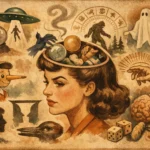
Brain imaging shows that people use many regions of the brain over the course of ordinary daily life. Different areas support different functions, from vision and language to planning and movement. Not every region fires at maximum intensity all the time, but that is not the same as saying 90 percent is unused. If most of your brain were doing nothing, damage to those areas would not matter much. In reality, even small injuries can have major effects.
The more useful truth is not that you have vast unused brain mass. It is that the brain is adaptable. Learning, practice, sleep, stress, and environment all shape how effectively it functions.
Myth 2: People are either left-brained or right-brained
This myth survives because it feels personally validating. Analytical people get to call themselves left-brained. Creative people claim the right-brained identity. It turns personality into a neat binary.
Yes, some brain functions are more lateralized than others. Language is often more strongly associated with the left hemisphere in many people, while some aspects of spatial processing lean more rightward. But that does not mean your identity, intelligence, or career potential is governed by one dominant side. Most tasks rely on networks spread across both hemispheres, working together constantly.
The trade-off here matters. Brain specialization is real. Pop psychology turned that into a personality horoscope. If you have ever said, “I’m just not a logical person” or “I’m not creative,” this myth can become a self-fulfilling limit.
Myth 3: Memory works like a video recording
People often speak about memory as if the mind stores events exactly and then replays them on demand. That is not how memory works. Memory is reconstructive, not reproductive.
Each time you recall an event, your brain rebuilds it from stored fragments, meaning, emotion, and context. That process is surprisingly vulnerable to distortion. Suggestive questions, social influence, stress, and repeated retelling can all reshape what feels like a solid memory. Confidence does not guarantee accuracy.
This does not mean memory is useless or that all recollection is false. It means memory is an active psychological process, not a perfect archive. That has serious implications for arguments, eyewitness testimony, family conflict, and even how we narrate our own identity.
Myth 4: Opposites attract
This one is attractive because it makes relationships feel dramatic and destined. The quiet realist falls for the chaotic extrovert. The planner falls for the free spirit. It works beautifully in movies. Real life is less forgiving.
Research generally finds that similarity matters more than stark difference, especially in values, education, attitudes, and lifestyle preferences. Shared assumptions reduce friction and make coordination easier over time. Attraction can absolutely spark between very different people, but long-term compatibility often depends more on overlap than contrast.
Where the myth contains a grain of truth is that novelty can be compelling. Someone different from you may feel excited or expansive at first. But excitement and compatibility are not interchangeable. That distinction saves people a lot of confusion.
Myth 5: Venting anger helps you “get it out.”
The logic sounds intuitive. If anger builds pressure, expressing it should release that pressure. But research has repeatedly challenged the catharsis idea, especially when venting means rehearsing anger or acting it out aggressively.
Punching a pillow, rage-posting, or repeatedly replaying an insult can keep the emotional system activated rather than calm it down. In some cases, it strengthens angry thought patterns and makes future anger more likely. Expression is not the problem. The form of expression matters.
Talking through anger with reflection, naming what triggered it, and creating distance before reacting can help. Fueling it usually does not. This is one of those areas where “be authentic” is incomplete advice. Not every impulse becomes healthier when intensified.
Myth 6: Trauma is always repressed and hidden from awareness
This is one of the most sensitive myths in public psychology, which is exactly why it needs nuance. Trauma can affect memory in complicated ways. Some people remember traumatic events vividly and intrusively. Others recall them in fragments. Some avoid thinking about them. And yes, memory gaps can happen.
But the popular idea that traumatic experiences are routinely banished into the unconscious and later recovered intact is not well supported as a general rule. Suggestion, expectation, and therapeutic influence can also shape memory, which makes this topic especially delicate.
The evidence-based position is not that trauma is simple. It is that trauma does not produce one universal memory pattern. Anyone promising a single formula is probably selling certainty where uncertainty belongs.
Myth 7: Willpower is the main thing separating disciplined people from everyone else
This myth sounds motivational, but it often leads to shame. If success is mostly about self-control, then inconsistency becomes a character flaw. Psychology paints a more interesting picture.
People with strong habits do not necessarily spend their days in heroic acts of restraint. Often, they structure their environment better. They reduce friction for useful behaviors and increase friction for distracting ones. They automate decisions. They sleep enough. They avoid relying on motivation in moments when motivation is least reliable.
Willpower matters, but not in the mythic way people imagine. It is part of the system, not the whole system. The person who seems highly disciplined may simply be less exposed to temptation, more guided by routine, or better at designing conditions that make follow-through easier.
What these myths get wrong about human nature
If you step back, these myths share a pattern. They all turn dynamic processes into fixed traits. They turn context into destiny. They replace probabilities with absolutes.
That is usually where pop psychology drifts off course. Real psychological science tends to be less dramatic and more conditional. Memory is shaped by context. Personality has some stability, but behavior changes across situations. The brain is specialized, but also networked and adaptable. Attraction is emotional, but not random. Motivation is personal, but also environmental.
For people interested in growth, this is actually good news. A myth tells you who you are in a rigid, flattering, or discouraging way. Evidence gives you leverage. It shows where change is possible and where self-knowledge needs more honesty.
How to get better at spotting bad psychology
A useful rule is to get suspicious whenever a claim is too clean. If it sorts everyone into two categories, promises a hidden superpower, or explains a complex life pattern with one cause, slow down. Human behavior is rarely that elegant.
It also helps to ask what the claim encourages you to do. Does it invite curiosity, or just hand you a label? Does it make room for context, trade-offs, and uncertainty? Good psychology usually increases your ability to observe reality more carefully. Bad psychology gives you a shortcut that feels insightful before it proves useful.
That is part of the value of evidence-based platforms like The Psychology of Everything. They do not just hand you facts. They help you build better mental filters for the claims that flood social media, self-help culture, and everyday conversation.
The most helpful version of psychology is not the one that gives you a neat story about yourself. It is the one that makes it harder for you to mislead, including by your own favorite explanations.