

- Why psychology myths spread so easily
- 1. We only use 10% of our brain
- 2. People are either left-brained or right-brained
- 3. Opposites attract
- 4. Venting anger gets it out of your system
- 5. Body language reveals exactly what someone is thinking
- 6. Memory works like a video recording
- 7. A high IQ guarantees success
- 8. Mental illness is just a chemical imbalance
- 9. If you really want something, motivation should come first
- 10. Most people would never follow harmful authority
- What to do instead of believing tidy myths
You can tell a bad psychology idea has gone mainstream when it starts sounding like common sense. “People only use 10% of their brain.” “Opposites attract.” “You need to vent your anger.” These claims survive because they feel intuitive, flatter our self-image, or offer a neat explanation for messy behavior. But if your goal is to understand yourself and other people more accurately, these myths get in the way.
So here are 10 psychology myths you should stop believing – not because being technically correct is fun at parties, but because bad mental models shape real decisions about relationships, work, parenting, motivation, and mental health.
Why psychology myths spread so easily
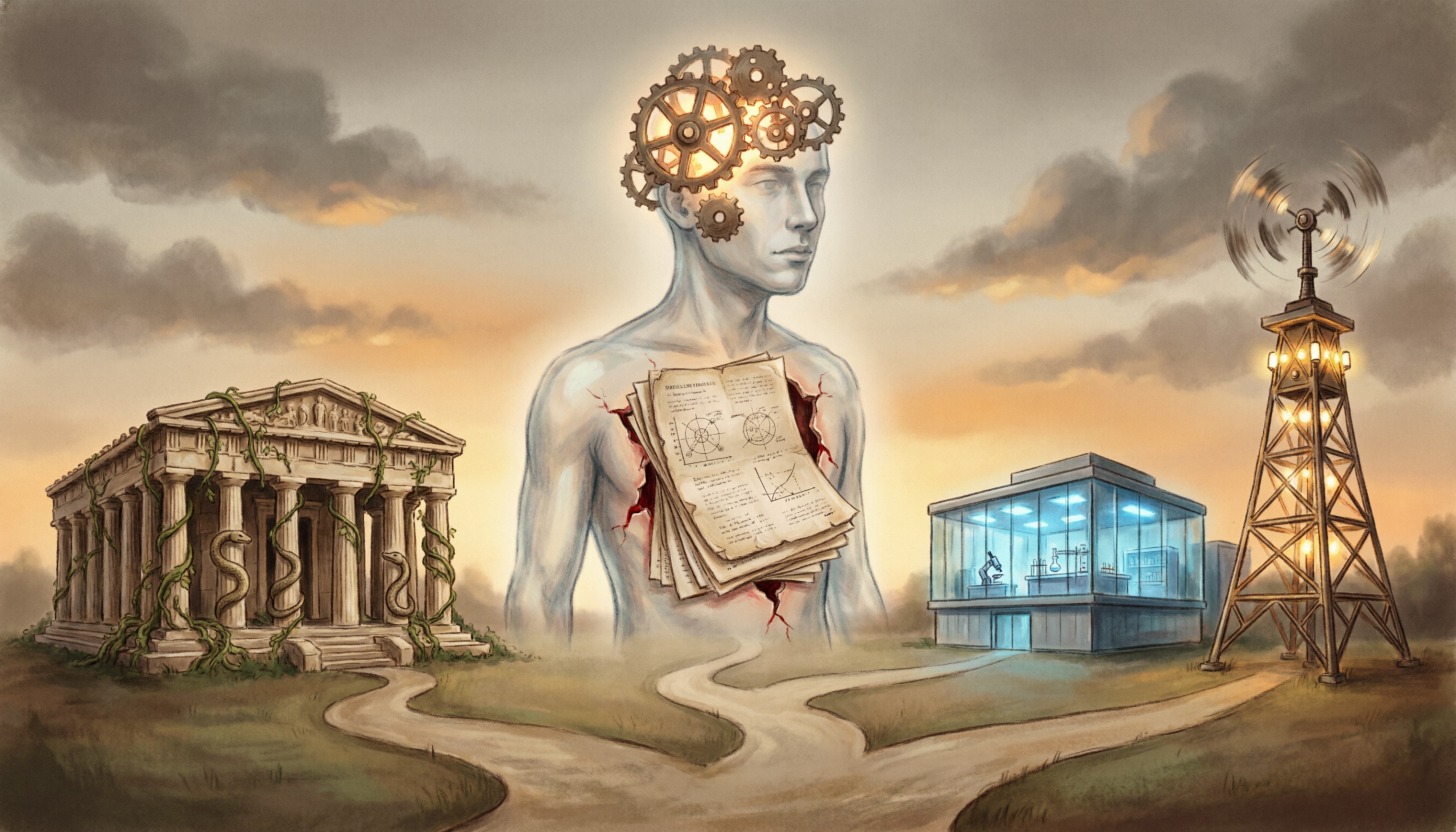
Psychology is especially vulnerable to misinformation because everyone has firsthand experience of having a mind. That creates a dangerous illusion of expertise. If an idea matches your personal experience, comes wrapped in science-y language, or gets repeated often enough on TikTok, in self-help books, or in workplace training, it starts to feel true.
The problem is that human behavior is not only personal. It is also noisy, context-dependent, and full of bias. Good psychological science often gives less satisfying answers than pop psychology does. It deals in probabilities, trade-offs, and patterns, not tidy slogans.
1. We only use 10% of our brain
This is probably the most famous myth in psychology, and it is nonsense. Brain imaging, neurological studies, and clinical observations all show that most parts of the brain have some function, even if they are not active at maximum intensity all the time.

If 90% of your brain were useless, brain injuries would be far less disruptive than they actually are. The persistence of this myth says more about our love of hidden potential than it does about neuroscience. People want to believe they have a massive reserve of untapped genius waiting to be switched on.
The more useful truth is less glamorous. You already use your whole brain. The issue is not unlocking dormant regions. It is learning, practicing, resting, and building environments that help your existing capacities work better.
2. People are either left-brained or right-brained
This idea has incredible branding power. It gives people a simple identity: logical and analytical on one side, creative and intuitive on the other. The actual science is much less dramatic.
Certain brain functions are more lateralized than others. Language, for example, tends to involve the left hemisphere more heavily in many people. But complex thinking depends on networks that span both hemispheres. You are not a “right-brained creative” trapped in a spreadsheet job, nor a “left-brained thinker” doomed to be emotionally tone-deaf.
This myth matters because it can become self-limiting. Once people adopt a brain-based identity, they often stop trying in areas they think are not “them.” That is not insight. That is a story with a lab coat on.
3. Opposites attract
Sometimes they do, briefly. Difference can create intrigue, novelty, and chemistry. But long-term relationship research generally points in a different direction: similarity tends to matter more.
People are more likely to connect with others who share values, life goals, educational background, habits, and attitudes. Similarity reduces friction and increases mutual validation. That does not mean couples need identical personalities. Some differences can be complementary. One person may be more spontaneous, the other more organized. But the fantasy that extreme incompatibility creates lasting romantic magic is mostly a cultural script.
If a relationship feels like constant translation, that is not always depth. Sometimes it is just a mismatch.
4. Venting anger gets it out of your system
This is one of the most popular and damaging myths in everyday mental health. The idea sounds plausible: if you express anger forcefully, you release it. In reality, repeatedly acting out anger can intensify it.
Research on catharsis has consistently found that aggressive venting often represses the emotional state instead of resolving it. Punching a pillow, rage-posting, or replaying the offense in dramatic detail can keep your nervous system activated. You are not emptying the tank. You may be topping it up.
That does not mean suppressing anger is healthy either. The better alternative is regulation: naming what happened, creating distance from the trigger, and choosing a response that addresses the problem without feeding the emotion.
5. Body language reveals exactly what someone is thinking
Popular psychology loves the fantasy that hidden truths leak through crossed arms, darting eyes, or a fake-looking smile. This is why so many people think they can spot liars instantly. They usually cannot.
Body language is real, but it is not a cheat code. A person may avoid eye contact because they are anxious, culturally polite, distracted, or ashamed – not because they are deceiving you. Crossed arms might signal defensiveness, or they might signal that the room is cold.
Behavior only becomes meaningful in context. There is no universal gesture dictionary that lets you decode minds with forensic certainty. Anyone selling that idea is usually overselling confidence and underselling ambiguity.
6. Memory works like a video recording
People often talk about memory as if the brain stores events in neat, retrievable files. That is not how memory works. Memory is reconstructive, not reproductive.
Each time you remember something, you rebuild it from fragments. That reconstruction can be shaped by suggestion, emotion, later information, and expectation. This is why eyewitness testimony can be sincere and wrong at the same time.
The practical implication is huge. Confidence is not proof of accuracy. Your strongest memories may feel vivid because they are emotionally charged or often repeated, not because they are perfectly preserved. Memory is less like replaying footage and more like editing a story each time you tell it.
7. A high IQ guarantees success
IQ predicts some important outcomes, especially certain kinds of academic and cognitive performance. Pretending intelligence does not matter is its own kind of denial. But the leap from “IQ matters” to “IQ determines success” is where the myth takes over.
Real-world outcomes depend on far more than abstract reasoning ability. Personality traits such as conscientiousness, emotional regulation, social skill, persistence, and impulse control matter a great deal. So do opportunity, health, timing, education, and luck.
Some highly intelligent people underperform because they cannot tolerate boredom, criticism, or delayed gratification. Others with more ordinary cognitive ability build stable, impressive lives because they can show up consistently and work well with people. Human success is multivariable. Psychology gets weird whenever we pretend one trait explains everything.
8. Mental illness is just a chemical imbalance
This phrase became popular because it made mental health sound medical, concrete, and less morally loaded. That helped in some ways. But it also oversimplified the picture so much that it became misleading.
Conditions like depression and anxiety involve biology, yes, but also cognition, stress, trauma, sleep, relationships, behavior, environment, and social context. Reducing mental illness to a simple chemical problem implies there is one clean internal defect and one obvious fix. For many people, that is not how recovery works.
The stronger framework is biopsychosocial. Minds are shaped by brains, but brains are also shaped by life. That complexity can be frustrating, but it is more honest and often more useful.
9. If you really want something, motivation should come first
This myth quietly sabotages a lot of people. They wait to feel inspired before starting, then interpret the lack of motivation as proof they do not care enough.
Psychology suggests the sequence often runs in the opposite direction. Action creates momentum. Progress creates motivation. Small wins change how effort feels. This is why behavior change advice that depends on passion alone tends to collapse by week two.
You do not need to feel ready to begin. You need a system that makes beginning easier than avoiding. That might mean lowering the bar, attaching a habit to an existing routine, or focusing on consistency over intensity. Motivation is often a consequence, not a prerequisite.
10. Most people would never follow harmful authority
People like to assume they would be the exception. They imagine that under pressure, they would instantly resist manipulation, coercion, or groupthink. The research tradition around obedience and conformity suggests people are much more vulnerable than they want to believe.
This does not mean humans are mindless followers. It means context matters more than ego likes to admit. Status cues, institutional pressure, social norms, fear of standing out, and gradual escalation can push ordinary people into harmful choices.
That is not a reason for cynicism. It is a reason for humility. The belief that “I could never” is often less protective than understanding the conditions under which people do exactly that.
What to do instead of believing tidy myths
The best replacement for pop psychology is not cynicism. It is a better question. Instead of asking, “Is this catchy idea true?” ask, “What evidence supports it? In what situations does it hold up? What are the limits?”
That mindset matters because false beliefs about psychology do not stay theoretical. They influence who we date, how we argue, how we remember, how we parent, and how we judge ourselves. When The Psychology of Everything cuts through myths and pseudo-science, the goal is not to kill curiosity. It is to make curiosity sharper.
A more accurate view of human behavior is rarely as neat as the myth, but it is far more useful. And in real life, useful beats catchy every time.