
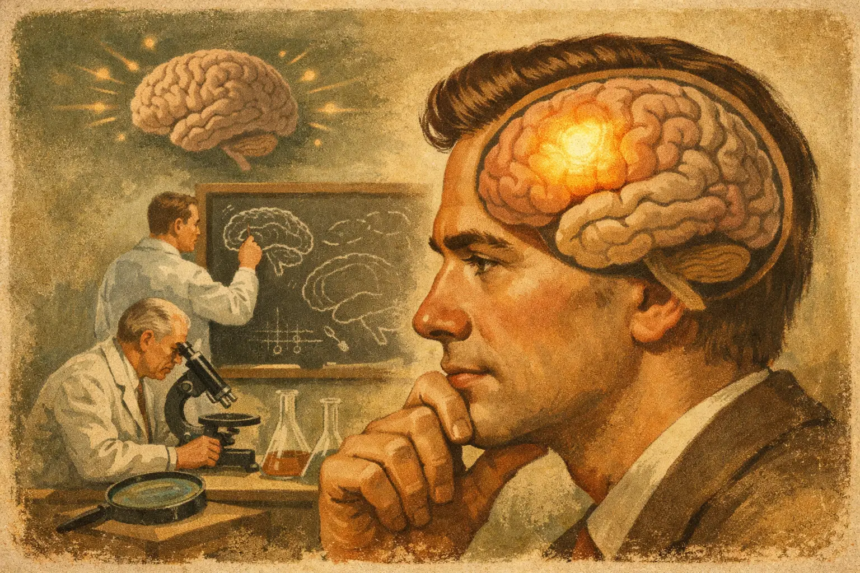
You’ve probably heard some version of it before: humans use only 10% of their brains, and if we could tap into the other 90%, we’d become wildly smarter, more creative, maybe even superhuman. It’s one of the most persistent ideas in pop psychology, which is exactly why the 10% brain myth explained matters properly. It sounds empowering. It also happens to be wrong.
What makes this myth so sticky is that it flatters us. It suggests hidden potential, a secret reserve of genius waiting to be switched on. That is emotionally satisfying in a way the truth is not. Real brain science is messier, less cinematic, and far more interesting.
What the 10% brain myth actually gets wrong
The basic claim is that most of the brain sits idle, doing nothing, while a small fraction handles daily life. Neuroscience does not support that idea. Brain imaging, lesion studies, and decades of cognitive research all point in the same direction: most regions of the brain have a function, and over the course of a normal day, we use far more than 10%.
That doesn’t mean every neuron fires at once. If all of your brain cells were maximally active simultaneously, that would not be a sign of enlightenment. It would be a neurological emergency. Healthy brain function depends on finely tuned patterns of activation. Different networks come online for different tasks, then quiet down as others take over.
In other words, your brain is not a muscle sitting mostly unused in a garage. It is more like a city grid. Different neighborhoods light up at different times depending on what’s happening, but the existence of quiet streets at one moment does not mean 90% of the city is pointless.
Where did the myth come from?
Like many durable misconceptions, this one seems to be a mashup of half-remembered ideas, exaggerated interpretations, and motivational spin.
One possible source is early psychology language about human potential. In the late 19th and early 20th centuries, thinkers sometimes argued that people fail to develop their full mental capacities. That is a very different claim from saying they literally use only 10% of their brain tissue, but the two ideas are easy to blur if you want a catchy slogan.
William James is often dragged into the story. He wrote that humans make use of only a small part of their possible mental and physical resources. He was talking about unrealized potential, not dormant brain matter. Still, once a motivational culture gets hold of a statement like that, precision usually disappears.
Another contributor was early neuroscience itself. Scientists knew some regions had obvious sensory or motor functions, while other areas were harder to map. Those less understood regions were sometimes described in ways that got distorted over time into “unused” areas. But “not yet fully understood” does not mean “inactive.”
Then popular media finished the job. Self-help books, advertisements, films, and speakers repeated the claim because it sells. It offers the fantasy of a hidden upgrade. And once an idea becomes culturally familiar, it starts to feel true simply because you’ve heard it so many times.
Why people want the myth to be true

This is where psychology gets especially revealing. The 10% myth survives not because the evidence is strong, but because the story is useful.
It gives people hope that they are underperforming for a reversible reason. If 90% of your brain is still waiting to be activated, then your current struggles do not reflect your real limits. That’s comforting. It protects self-esteem.
It also matches a broader bias toward hidden-cause thinking. People are drawn to explanations that suggest secret forces beneath the surface, whether that means suppressed abilities, mysterious talents, or “untapped” parts of the mind. A simple biological myth can feel more exciting than the reality that growth usually comes from effort, learning, sleep, repetition, stress management, and time.
There’s also a status appeal. The myth implies that exceptional people have somehow accessed more of their brain than the rest of us. That flatters both celebrity culture and personal ambition. It turns intelligence into something magical rather than gradual and uneven.
What brain science actually shows
If you look at modern evidence, the picture is clear. Brain scans show distributed activity across many regions, even during ordinary tasks. When you speak, listen, remember, plan, move, regulate emotion, or interpret facial expressions, multiple systems coordinate at once.
Even at rest, the brain is busy. Researchers have identified resting-state networks, including the default mode network, that remain active when you are not focused on an external task. Your brain does not go mostly dark when you stop working. It shifts modes.
Brain damage also tells an important story. If we truly used only 10% of the brain, damage to large “unused” areas should often have little effect. That is not what clinicians see. Injuries to many different parts of the brain can impair language, attention, mood, memory, vision, movement, social judgment, and personality. Function is distributed, but it is not disposable.
There’s also an energy argument. The human brain makes up a small percentage of body weight, yet consumes a large share of the body’s energy. Evolution is not in the habit of preserving costly organs that mostly sit around doing nothing. From a biological standpoint, a 90% idle brain would be a terrible design.
The grain of truth hiding underneath
To be fair, there is a reason the myth feels adjacent to something real. Most people do not operate at their full potential all the time. Attention drifts. Habits sabotage us. Skills go undeveloped. Stress narrows thinking. Sleep loss hurts memory and emotional control. In that sense, many people are not making the most of their cognitive abilities.
But that is a performance issue, not a brain-usage issue. The gap is not between 10% and 100% of the brain. It is between what your brain is capable of under the right conditions and how it functions under distraction, fatigue, anxiety, overload, or lack of training.
That distinction matters because it changes the solution. You do not need a mystical activation method. You need conditions that support better brain function.
So, how do you actually use your brain better?
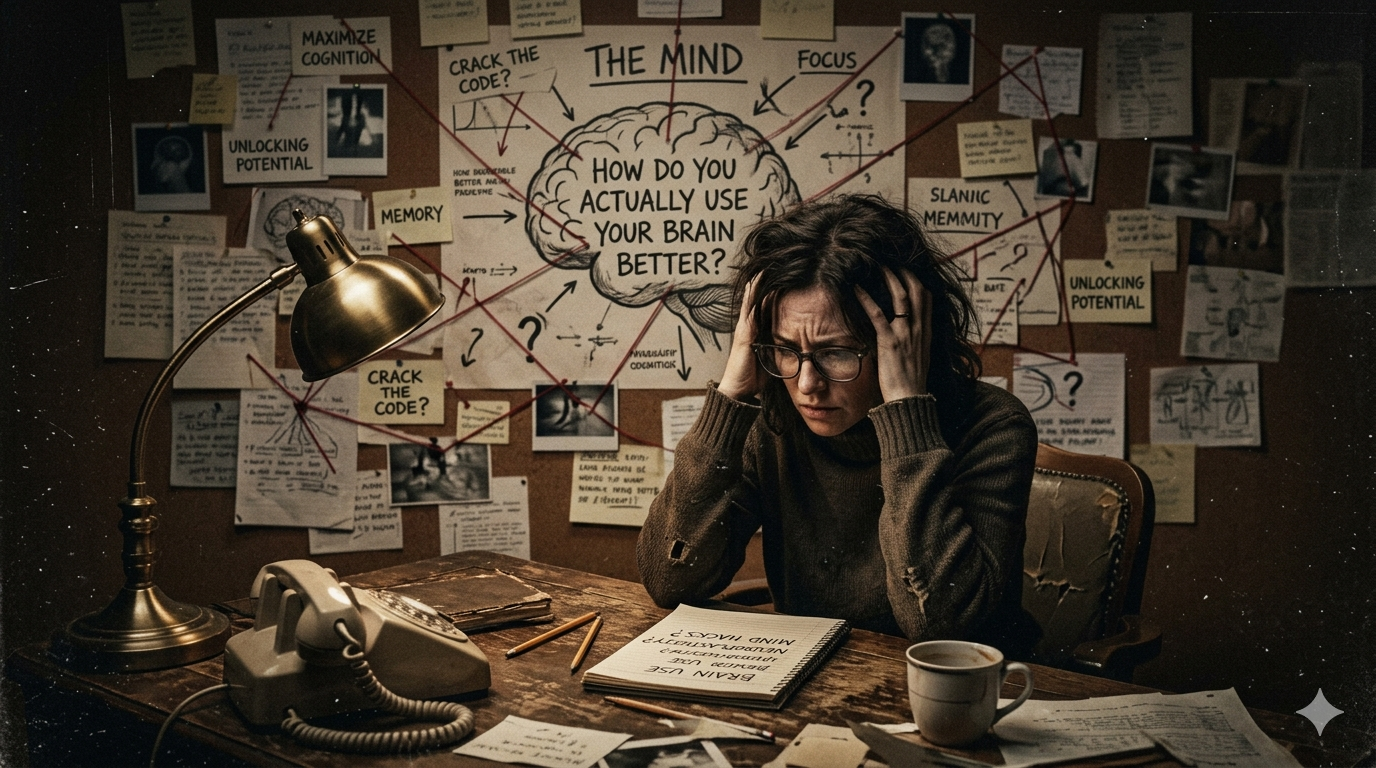
This is the less glamorous part, but it’s the part that works. Cognitive performance improves through behaviors that are almost offensively unmagical.
Sleep is one of the biggest. If you want better attention, emotional regulation, memory consolidation, and decision-making, sleep is not optional background maintenance. It is a core brain function.
Learning also changes the brain. Practice strengthens neural pathways. New experiences can build skills. Therapy can reshape patterns of thought and emotional response. Focused repetition matters because the brain is plastic, not because huge sections are waiting to be switched on like unused software.
Movement helps too. Physical exercise supports blood flow, mood regulation, and cognitive health. So does managing chronic stress. A brain under constant threat mode is using itself, just not in the way most people want. It becomes biased toward survival, vigilance, and short-term reaction rather than flexible thinking.
And then there’s attention. In a culture built to fracture it, sustained focus is increasingly a cognitive advantage. Your brain works best when it can allocate resources without being interrupted every 30 seconds. That doesn’t mean multitasking is impossible. It means task-switching has a cost, and most people pay it more often than they realize.
Why the myth still matters
You might ask whether debunking an old brain myth is really that important. It is, because bad explanations create bad expectations.
When people believe in dramatic hidden reserves, they become vulnerable to pseudo-scientific products, miracle training systems, and exaggerated claims about “activating” dormant power. The myth creates a market for nonsense.
It also distorts how growth actually happens. Human change is usually incremental. You improve your mind by shaping habits, practicing skills, protecting your mental health, and understanding your own behavior more accurately. That may be less thrilling than unlocking 90% of a sleeping brain, but it is real.
That’s part of the broader mission behind evidence-based psychology, including platforms like The Psychology of Everything: cutting through myths is not about being pedantic. It’s about giving people better tools for living.
The 10% brain myth explained in one sentence
We do not use only 10% of our brains. We use different parts for different things, at different times, and the real challenge is not activating unused tissue but using our existing brain more skillfully.
That’s a better story anyway. It means your mind is not waiting for a fantasy trigger. It is already active, adaptive, and changing all the time. The opportunity is not to access some hidden 90%. It’s to treat the brain you already have like the living system it is, and give it a better chance to do what it does best.