

- What ghostlighting actually is
- Why modern dating trends make ghostlighting easier
- The psychology behind why it feels so destabilizing
- Ghostlighting vs. ordinary inconsistency
- Signs you may be dealing with ghostlighting
- Why do some people ghostlight?
- How to respond without getting pulled deeper in
- Modern dating trends: the rise of ghostlighting in 2026
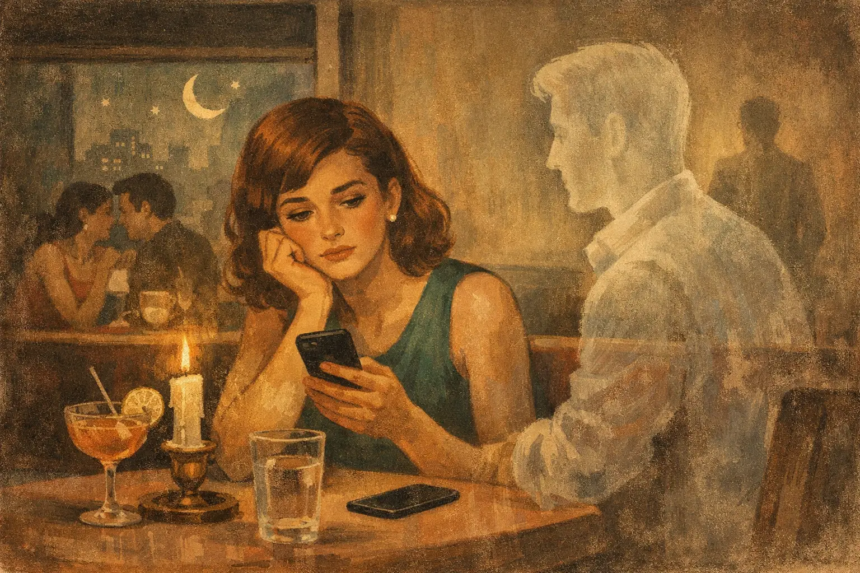
You text someone for three weeks. They flirt, make plans, cancel, vanish, then reappear acting oddly warm – as if the silence never happened. When you bring it up, they tell you you’re overthinking it, being intense, or expecting too much too soon. That is where the rise of ghostlighting starts to feel less like a buzzword and more like a recognizable psychological pattern.
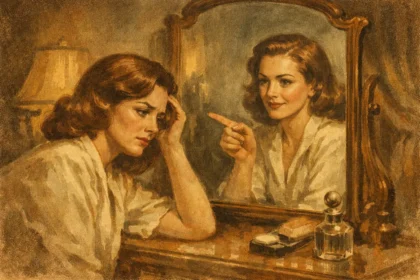
Ghostlighting is not just ghosting with better branding. It describes a specific relational dynamic: someone withdraws, creates confusion through absence or inconsistency, then returns in a way that makes you question whether the problem was ever real. The “ghost” part is the disappearance. The “lighting” part is the reality distortion. Together, they create a dating experience that is uniquely disorienting because the injury is not only rejection – it is uncertainty.
What ghostlighting actually is
In plain terms, ghostlighting happens when a person goes quiet, becomes erratic, or drops out of contact, then minimizes your reaction when they return. They may insist that nothing unusual happened. They may frame your discomfort as clinginess, insecurity, or drama. Sometimes this is deliberate manipulation. Sometimes it is emotional immaturity dressed up as casual dating culture. Either way, the effect on the other person can be the same.
That distinction matters. Not every inconsistent dater is running a calculated psychological strategy. Some people are conflict-avoidant, overstimulated, ambivalent, or addicted to the emotional novelty of dating apps. But impact matters as much as intent. If someone repeatedly creates ambiguity and then teaches you to distrust your own reading of the situation, the relationship starts to erode your internal compass.
Why modern dating trends make ghostlighting easier

The rise of ghostlighting in 2026 makes sense when you look at the broader environment of digital dating. We are communicating more often, but not always more clearly. Constant access creates a strange illusion of intimacy. A few voice notes, late-night confessions, and daily memes can make a connection feel emotionally advanced long before any real commitment exists.

That gap between emotional intensity and actual accountability is fertile ground for confusion. When communication is frequent but undefined, people can disappear without technically ending anything. Then they can return without technically repairing anything. The result is a relationship script with no stable rules.
There is also a cultural shift toward low-friction exits. Many daters now treat uncomfortable conversations as optional, especially early on. Add app abundance, algorithmic choice, and a steady stream of romantic alternatives, and avoidance becomes easier than clarity. Ghostlighting thrives in exactly that environment – one where ambiguity is normalized, and accountability is negotiable.
The psychology behind why it feels so destabilizing
The reason ghostlighting hits so hard is not simply that someone disappeared. It is that your brain is forced to hold conflicting data at the same time. They seemed interested, then absent. Caring, then cold. Present, then dismissive. Human beings are not great at sitting inside unresolved social ambiguity. Our minds look for patterns, explanations, and closure.
That search can quickly turn inward. Instead of asking, “Why is this person behaving inconsistently?” you start asking, “Am I misreading everything?” This is where the dynamic becomes psychologically costly. Unclear rejection is often harder to metabolize than direct rejection because it keeps hope alive while undermining trust.
Attachment psychology helps explain part of the pull. Intermittent reinforcement – unpredictable rewards scattered between periods of silence – can be extremely sticky. The occasional warm message after withdrawal does not calm the nervous system. It often hooks it more deeply. You become preoccupied not because the connection is healthy, but because it is unresolved.
Ghostlighting vs. ordinary inconsistency
Not every delayed reply is a red flag. Adults have jobs, families, stress, mental health struggles, and fluctuating energy. Real life can make communication uneven. The difference is in the pattern and the response.
A basically considerate person who drops off for a few days will usually acknowledge it directly. They might say they were overwhelmed, apologize, and adjust. A ghostlighter tends to return without repair. If you mention the disconnect, they redirect attention to your reaction. Suddenly, the issue is not their disappearance but your sensitivity.
That move is the tell. Healthy dating allows reality to stay shared. Unhealthy dating pressures one person to carry all the uncertainty while pretending nothing happened.
Signs you may be dealing with ghostlighting
One common sign is emotional whiplash. The connection feels unusually intense, then strangely absent, then intense again. Another is revisionism. You bring up a clear change in behavior, and the other person talks as if you invented it.
You may also notice that your standards start shrinking. You stop expecting consistency, basic communication, or follow-through because asking for those things keeps getting framed as neediness. That is often the moment to pay attention. When a dating dynamic makes you work harder to justify your own perceptions, it is rarely a good sign.
A final clue is how your body responds. Many people in these dynamics report feeling hypervigilant, mentally preoccupied, or oddly relieved by scraps of contact that should not feel so meaningful. The nervous system often spots instability before the conscious mind wants to admit it.
Why do some people ghostlight?
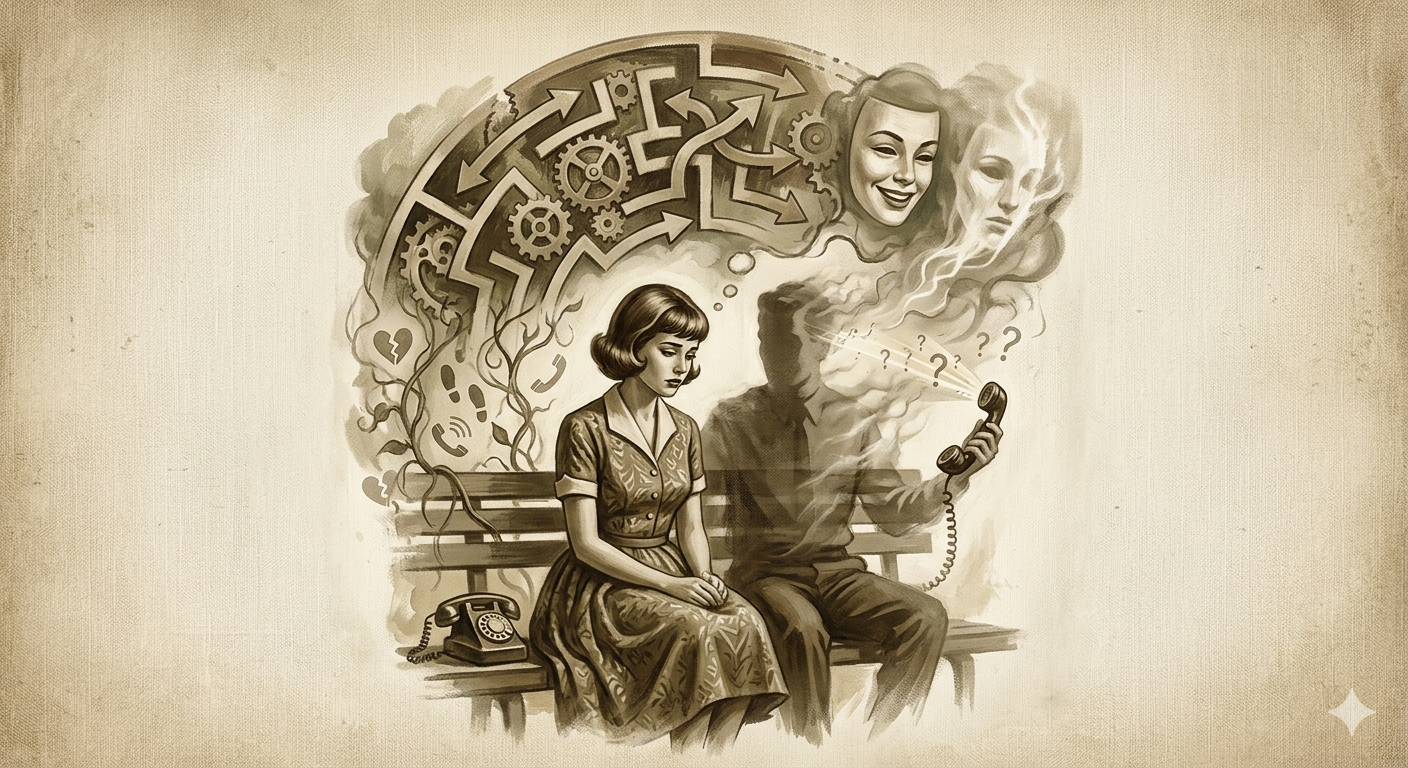
There is no single psychological profile behind this behavior. For some, it is avoidance. Direct honesty risks guilt, conflict, or loss of control, so they disappear and later smooth it over. For others, it reflects a need for validation without the burden of mutual responsibility. They want access to attention, affection, and emotional reassurance, but only on terms that protect their freedom.
In some cases, ghostlighting may also reflect low emotional insight. A person may genuinely not understand the impact of inconsistent contact because they are detached from their own motives. They act on impulse, return when lonely, and rationalize after the fact. That does not make the behavior harmless. It just means not all harmful dating behavior is highly self-aware.
This is one reason simplistic online advice can miss the mark. Labeling every confusing person a narcissist may feel satisfying, but it often replaces insight with theater. A better question is more practical: regardless of why they do it, what does repeated confusion tell you about their capacity for a healthy relationship?
How to respond without getting pulled deeper in
The first move is to trust data over chemistry. If someone repeatedly disappears, dodges accountability, or treats your reality as negotiable, believe the pattern. Attraction can coexist with poor relational behavior. Strong feelings do not make mixed signals less mixed.
The second move is to use direct language early. You do not need a dramatic confrontation. A calm statement is often enough: “I am looking for consistency and clear communication. If that is not where you are, that is okay, but I do not want to do the on-off thing.” This works less as a persuasion tactic and more as a filter. Their response tells you a lot.
It also helps to stop over-weighting explanations. People who ghostlight often offer just enough plausibility to keep the door open. Stress, busy schedules, family issues, uncertainty, bad timing – these can all be real. They can also become permanent reasons why basic reliability never arrives. Understanding someone is not the same as being well-treated by them.
Finally, notice whether the connection is costing you self-respect. Good dating should involve some uncertainty, especially early on. It should not require chronic self-abandonment.
Modern dating trends: the rise of ghostlighting in 2026
What makes this one of the more revealing modern dating trends is that it exposes a broader tension in contemporary relationships. Many people want the emotional benefits of closeness while resisting the structure that makes closeness safe. They want intimacy without obligation, access without clarity, and flexibility without consequence.
That tension is unlikely to disappear in 2026. If anything, the language around dating is becoming more psychologically literate while behavior remains uneven. People now know terms like attachment style, boundaries, and emotional availability. But knowing the vocabulary is not the same as practicing the skills. Ghostlighting sits right in that gap between self-aware language and underdeveloped relational behavior.
The useful takeaway is not to become cynical. It is to become sharper. When you can name a pattern, you are less likely to personalize it. You stop treating confusion as a mystery to solve and start seeing it as information. That shift protects both your time and your nervous system.
A healthy relationship does not make you audition for basic reality. If someone keeps disappearing, returning, and then asking you to doubt what happened, the most psychologically intelligent response may be the simplest one: step back, believe the pattern, and choose clarity over chemistry.