
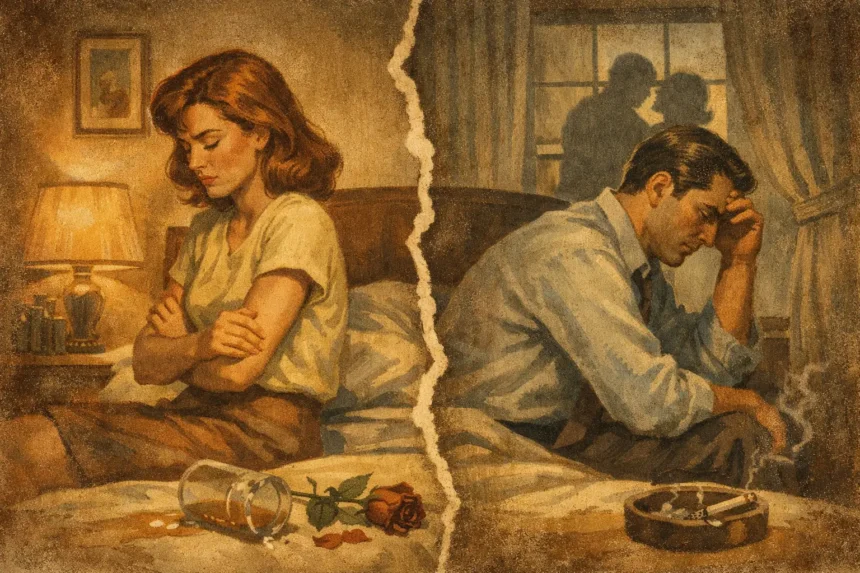
A lot of toxic relationships do not look obviously toxic from the inside. They often look confusing, emotionally intense, intermittently loving, and full of promises that things will get better next week, after this fight, after this stressful month. That is one reason why people stay in toxic relationships: the dynamic rarely presents itself as a clean, rational choice between “good” and “leave.”
Popular advice tends to flatten the issue. It asks, “Why didn’t they just walk away?” Psychology asks a better question: what forces make leaving so hard, even when someone knows the relationship is damaging? Once you look at attachment, learning, self-worth, fear, and social pressure, the behavior starts to make more sense.
Why people stay in toxic relationships is rarely about weakness
One of the most persistent myths is that people stay because they are naive, dependent, or lacking intelligence. That explanation is emotionally satisfying for outsiders, but psychologically shallow. People can be competent, insightful, and successful in other areas of life and still become stuck in harmful relationship patterns.
Toxic relationships often work through inconsistency rather than constant mistreatment. If a partner were cruel all the time, the picture would be clearer. But many harmful relationships cycle between affection and hostility, closeness and withdrawal, apology and repetition. That unpredictability matters because the brain is highly responsive to intermittent rewards.
In behavioral psychology, inconsistent reinforcement can make people persist longer, not less. When care and approval arrive unpredictably, they can become more psychologically gripping. A partner who alternates between criticism and tenderness may create a bond that feels intense, meaningful, and hard to quit, even when it is deeply destabilizing.
The attachment system does not care about logic
Romantic relationships activate old emotional machinery. Attachment theory suggests that close bonds can trigger profound fears around abandonment, rejection, and emotional safety. When that system is activated, people do not simply evaluate a relationship like a spreadsheet. They react with survival-level urgency.

For someone with an anxious attachment style, distance from a partner can feel unbearable. The relationship may be painful, but separation can feel even worse in the short term. That does not mean the person enjoys the toxicity. It means their nervous system may be prioritizing connection over well-being.
For someone with an avoidant style, the dynamic can be different but equally sticky. They may minimize harm, detach from their own needs, or stay in emotionally deprived relationships because dependence itself feels threatening. In both cases, old attachment patterns can make unhealthy dynamics feel oddly familiar.
And familiarity has power. Humans are often drawn not only to what is good for them, but to what feels known. If someone grew up around inconsistency, criticism, volatility, or conditional love, a toxic relationship may register as normal enough to tolerate. Not comfortable, exactly, but recognizable.
Trauma bonds can feel like love
This is where the conversation gets more serious. In some relationships, cycles of harm and repair create what many clinicians describe as a trauma bond. After fear, humiliation, or emotional injury, moments of kindness can feel disproportionately relieving. The partner who caused the pain then also becomes the source of comfort.
That loop can produce a powerful emotional dependency. The person is not staying because the relationship is healthy. They are staying because the cycle itself has fused distress with relief. From the outside, this can look irrational. From the inside, it can feel like love, hope, and survival all at once.
Hope is one of the strongest reasons people stay
Hope sounds virtuous, and sometimes it is. In relationships, though, hope can become a trap when it keeps people invested in potential instead of pattern.
Many toxic partners are not harmful every minute of every day. They may be charismatic, remorseful, attentive after conflict, or deeply convincing when they promise change. People do not usually stay for the worst moments. They stay for the memory of the best ones and the belief that those moments reveal the partner’s “real” self.
Psychologically, this makes sense. Humans are story-making creatures. We do not just respond to what is happening now. We respond to our interpretation of what it means and where it might lead. If someone believes the relationship is at a turning point, that this apology is different, or that love can heal the problem, they may keep enduring conditions they would otherwise reject.
This is especially true after a person has already invested a lot. Time, emotional labor, shared history, housing, children, or social identity can all strengthen the sunk cost effect. People think, consciously or not, “I have already given so much to this. Leaving would mean admitting that it will not become what I hoped it would be.”
Shame, self-doubt, and identity erosion

Toxic relationships do not only hurt feelings. Over time, they can distort self-perception.
A partner who criticizes, gaslights, belittles, or constantly shifts blame can slowly train the other person to distrust their own judgment. That erosion rarely happens all at once. It builds through repetition. One argument becomes ten. One accusation becomes a pattern. Eventually, the person on the receiving end may start asking not “Why is this happening to me?” but “Am I actually the problem?”
That shift is crucial. Once self-doubt sets in, leaving becomes harder because the person no longer fully trusts their reading of reality. If they believe they are too sensitive, too demanding, bad at relationships, or impossible to love, then staying can seem like the most realistic option.
Shame adds another layer. People may feel embarrassed that they chose this partner, ignored red flags, or defended the relationship to friends. The longer the pattern goes on, the more humiliating it can feel to admit it is harmful. Shame isolates, and isolation makes change harder.
Why smart people can still get stuck
Because intelligence does not override emotional conditioning. A person can understand manipulation in theory and still freeze when it happens in their own life. Insight helps, but it does not instantly regulate fear, attachment, or dependency.
This is one reason simplistic advice misses the mark. Telling someone to “just leave” may be factually correct, but psychologically useless if they are financially dependent, emotionally worn down, afraid of retaliation, or still bonded to the intermittent highs of the relationship.
External pressures matter more than people admit
Not every reason is internal. Some are brutally practical.
People stay because they share rent, children, immigration status, a social circle, a faith community, or a business. They stay because leaving may trigger stalking, harassment, or violence. They stay because they do not have enough money, support, or safe housing. They stay because the relationship has become entwined with everyday survival.
This matters because public conversations often over-psychologize the issue. Yes, attachment and self-worth play major roles. But sometimes the answer to why people stay in toxic relationships is also structural: the costs of leaving are high, and the alternatives are uncertain.
Culture can reinforce this too. Some people have been taught that loyalty means enduring pain, that commitment matters more than emotional safety, or that relationship success is about tolerating hardship. Others fear being judged for ending a relationship that looks fine from the outside. Social image can become its own trap.
What usually helps people leave
Change rarely starts with one dramatic revelation. More often, it starts when confusion turns into pattern recognition.
A person begins to notice that the apology is always followed by the same behavior. They stop grading the relationship on its best days and start looking at its average reality. They tell one honest friend what has been happening. They document incidents. They reconnect with parts of themselves that existed before the relationship narrowed their world.
Support matters here. Not pressure, not judgment, but grounded support that reduces isolation and restores perspective. Therapy can help, especially when it focuses not only on the partner’s behavior but on the deeper vulnerabilities that made the bond so hard to break. So can practical planning around finances, housing, and safety.
The goal is not just to leave. It is to rebuild the capacity to trust one’s own perceptions again.
There is no single answer to why people stay in toxic relationships because there is no single toxic relationship. Some are held together by fear, some by trauma bonding, some by hope, some by money, some by children, and many by a mix of all of them. If there is one useful shift, it is this: replace judgment with precision. People do not stay because they are foolish. They stay because human psychology is powerful, attachment is powerful, and harmful patterns often know exactly how to disguise themselves as love.
If this topic hits close to home, be gentle with your self-assessment. Clarity often arrives before action, and action often arrives in stages. Seeing the pattern is not a small thing. It is usually where your freedom starts.