- What emotional burnout actually is
- 10 Signs of Emotional Burnout
- 1. You feel tired in a way sleep doesn’t fix
- 2. Small things trigger outsized reactions
- 3. You’ve become emotionally numb
- 4. You’re more cynical than you used to be
- 5. Concentration feels unusually hard
- 6. You feel ineffective, even when you’re doing a lot
- 7. You dread normal responsibilities
- 8. Rest turns into escape, not recovery
- 9. Your body is sending signals too
- 10. You don’t feel like yourself anymore
- Why the signs of emotional burnout are easy to miss
- What to do if these signs sound familiar
Some people expect burnout to look dramatic – panic attacks, tears at work, or a total collapse. More often, the signs of emotional burnout are quieter and easier to excuse. You stop caring about things you used to care about. Small requests feel strangely threatening. Rest doesn’t quite work, but pushing harder doesn’t either.
That’s part of what makes emotional burnout so deceptive. It doesn’t always arrive as an obvious breakdown. It often shows up as a slow mismatch between what your nervous system can handle and what your life keeps demanding. If you miss that mismatch early, burnout can start to feel like your personality instead of a stress response.
What emotional burnout actually is
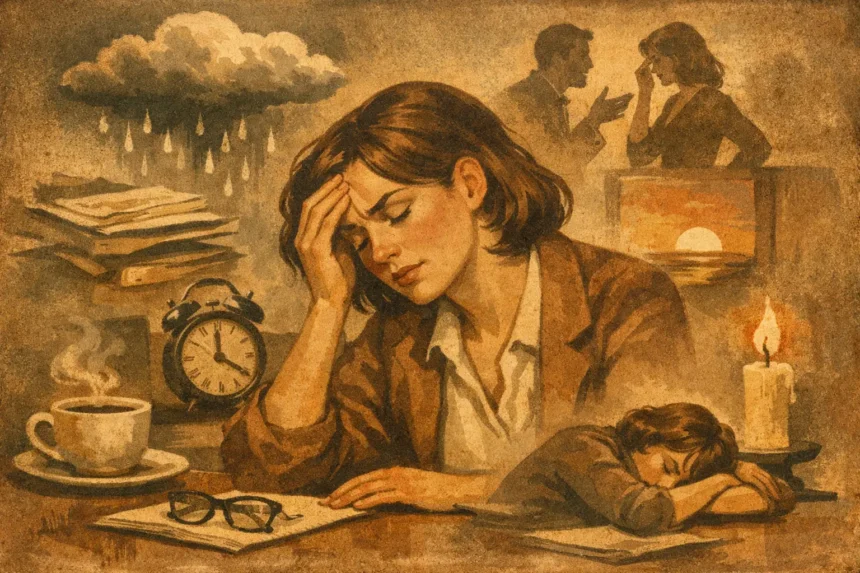
Emotional burnout is a state of depletion caused by prolonged stress, especially stress that feels inescapable, emotionally demanding, or chronically under-rewarded. It overlaps with workplace burnout, but it is not limited to jobs. Caregiving, relationship strain, financial pressure, constant digital availability, and even the emotional labor of looking fine can all contribute.
Psychologically, burnout is not just about being tired. It involves a shift in how you feel, think, and relate to the world. Research on burnout often points to three broad patterns: exhaustion, cynicism or detachment, and reduced sense of effectiveness. In plain English, you feel drained, less emotionally connected, and less capable than usual.
That matters because people often misread burnout as laziness, weakness, or a motivation problem. It is usually closer to an overload problem. Your system has been running too hot for too long.
10 Signs of Emotional Burnout
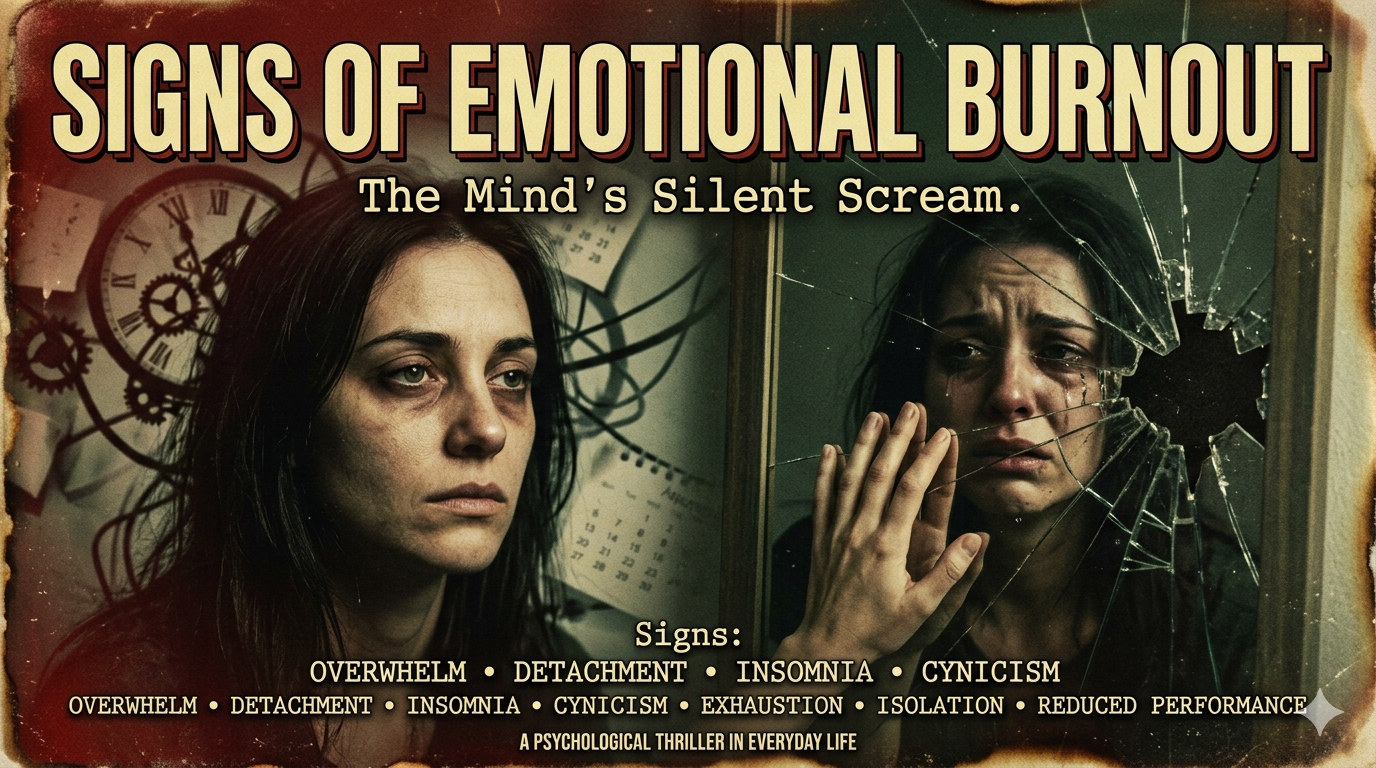
1. You feel tired in a way sleep doesn’t fix
Ordinary fatigue tends to improve with a decent night’s sleep or a lighter weekend. Burnout fatigue is more stubborn. You wake up already tired, or you rest physically but still feel emotionally scraped out.

This kind of exhaustion often comes with a strange flatness. It’s not just low energy. It’s the sense that your internal battery never fully charges, no matter how responsibly you try to recover.
2. Small things trigger outsized reactions
When emotional resources are low, your tolerance drops. A delayed email, a loud room, or someone asking one more favor can produce irritation far beyond the actual problem.
This doesn’t mean you’ve become unreasonable. It usually means your stress system is already overloaded, so even minor demands feel like extra weight on a structure that is close to cracking.
3. You’ve become emotionally numb
One of the less talked-about signs of emotional burnout is not feeling too much, but feeling less than usual. You may notice reduced excitement, reduced empathy, or a muted response to things that once mattered.
Numbness is sometimes the mind’s efficiency move. If everything feels too demanding, emotional shutdown can function as protection. The problem is that it blunts good feelings along with painful ones.
4. You’re more cynical than you used to be
Burnout often changes your interpretive style. You become more skeptical, more detached, and quicker to assume that effort is pointless. At work, this can sound like, “What’s the point? Nobody cares anyway.” In personal life, it can become withdrawal or a quiet resentment toward people who need things from you.
A little cynicism can feel smart, even realistic. But when it becomes your default lens, it often signals that emotional depletion has hardened into defensive distance.
5. Concentration feels unusually hard
Burnout doesn’t stay in the emotional lane. Chronic stress affects attention, memory, and decision-making. You may reread the same sentence, forget basic tasks, or struggle to organize thoughts that would normally come easily.
This is one reason burned-out people often accuse themselves of becoming incompetent. What’s often happening is cognitive load. Your brain is using energy to manage stress, leaving fewer resources for focus and executive function.
6. You feel ineffective, even when you’re doing a lot
A distorted sense of failure is common in burnout. You may still be functioning, meeting deadlines, and handling responsibilities, but it all feels inadequate. Achievements stop landing. Finished tasks bring relief at best, not satisfaction.
That reduced sense of efficacy is psychologically significant. When effort no longer produces a feeling of progress, motivation starts to erode. Over time, people either overwork to compensate or disengage to protect themselves.
7. You dread normal responsibilities
Burnout can make ordinary obligations feel strangely heavy. You put off messages, avoid appointments, or feel a wave of resistance before routine tasks. This is not always procrastination in the classic sense. Sometimes it is your mind reacting to one more demand when it already feels overdrawn.
The key distinction is pattern. Everyone avoids unpleasant tasks sometimes. With burnout, the dread spreads. Things that used to feel manageable now feel emotionally expensive.
8. Rest turns into escape, not recovery
There’s a difference between genuine recovery and disappearing into distraction. If all your downtime goes into scrolling, binge-watching, zoning out, or mentally checking out, you may be getting relief without restoration.
That doesn’t mean those behaviors are bad. Sometimes they are understandable coping tools. But if you never come away feeling clearer, steadier, or more replenished, your recovery strategy may not be matching the depth of your stress.
9. Your body is sending signals too
Emotional burnout is psychological, but it rarely stays abstract. It can show up as headaches, muscle tension, digestive issues, sleep disruption, appetite changes, frequent colds, or that wired-but-exhausted feeling many people recognize instantly.
This is one place where popular culture gets things half right. Stress really does affect the body. Not in a mystical way – in a nervous-system, hormone, inflammation, and sleep-disruption way. Emotional overload has physical consequences.
10. You don’t feel like yourself anymore
This is often the sign people mention last, even though it may be the most revealing. Burnout can create a kind of self-distance. You are still moving through your life, but with less patience, less curiosity, less humor, and less access to the version of yourself that feels most real.
That experience matters. Mental health changes are not always best measured by whether you can still function. A better question is whether your inner life still feels yours recognizably.
Why the signs of emotional burnout are easy to miss
Part of the problem is cultural. Many adults are rewarded for overriding their own signals. Being responsive, productive, accommodating, and available often gets framed as maturity. So when burnout starts, people interpret it as a cue to optimize harder.
There is also a myth that burnout only counts if your life looks objectively extreme. But stress is not just about volume. It is also about control, uncertainty, emotional intensity, and recovery. A person can look high-functioning on paper and still be deeply depleted.
It also depends on personality. Conscientious, empathic, and self-demanding people often miss burnout because they are used to carrying a lot. The very traits that make them capable can also make them slow to notice when capacity has been exceeded.
What to do if these signs sound familiar
The first move is not to shame yourself for having limits. Burnout tends to worsen when people treat it like a character flaw. A more accurate response is investigative: what is draining you, what is sustaining you, and where is the mismatch?
Start with reduction before optimization. If every solution is about doing recovery better while the demands stay absurd, the system is still broken. You may need fewer commitments, clearer boundaries, more predictable downtime, less emotional labor, or a serious rethink of what you are trying to carry alone.
It also helps to get specific. “I’m overwhelmed” is real, but broad. “I have no uninterrupted time,” “I’m absorbing everyone else’s emotions,” or “I never feel finished” gives you something to work with. Burnout becomes more manageable when it stops being a fog and starts becoming a pattern.
If the symptoms are persistent, severe, or bleeding into depression or anxiety, professional support matters. Burnout is not always solved by a vacation or a better morning routine. Sometimes it requires structural change, therapy, medical support, or all three.
At The Psychology of Everything, we spend a lot of time cutting through the myths that make people feel confused about their own minds. Burnout is one of those topics where myth does real damage. If you wait until you completely crash, you’ve waited too long.
Sometimes the most useful question is not “How much more can I handle?” It’s “Why have I been treating depletion like proof that I should keep going?” That question won’t solve everything at once, but it can point you back toward a life that feels livable again.