
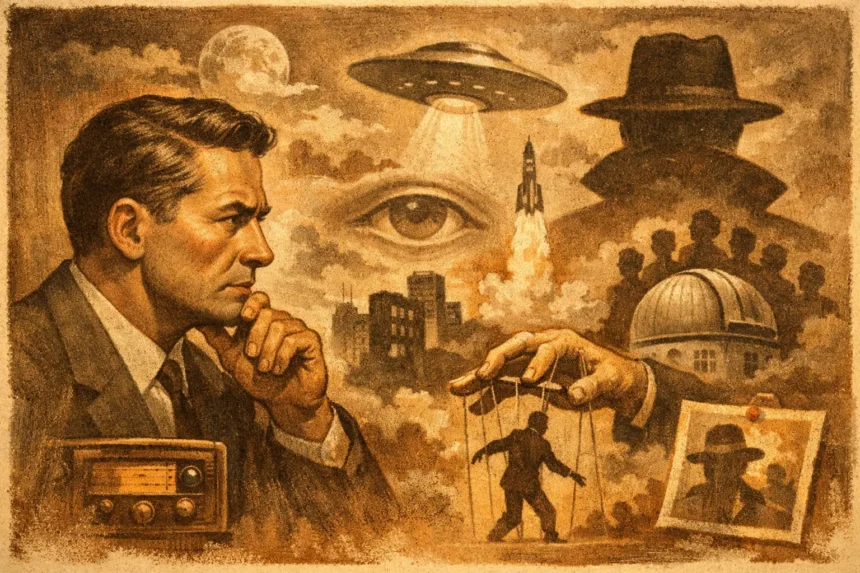
A celebrity dies unexpectedly, a public health crisis erupts, an election result shocks half the country – and almost on cue, conspiracy theories rush in to fill the gap. That pattern gets at the psychology of conspiracy beliefs: when reality feels chaotic, people often prefer a story that feels intentional, even if it is false.
Conspiracy beliefs are not just fringe curiosities. They show up in political arguments, wellness spaces, online fandoms, relationship conflicts, and everyday conversations. They matter because they change behavior. They can erode trust, fuel hostility, distort risk, and make people more vulnerable to manipulation. At the same time, treating believers as simply irrational misses the real psychological story.
What conspiracy beliefs do for the mind
A conspiracy belief usually claims that powerful people are secretly coordinating harmful or deceptive actions. Psychologically, that kind of explanation can be appealing because it offers something the brain craves during uncertainty: structure.
Humans are pattern-detecting machines. We are built to look for causes, infer motives, and connect scattered events into a coherent story. Most of the time, that helps us survive and make sense of social life. But under stress, the same mental machinery can overshoot. Random events start to feel meaningful. Coincidences look suspicious. Ambiguity gets interpreted as hidden intent.
This is one reason conspiracy theories often surge during periods of instability. Pandemics, economic shocks, war, rapid technological change, and social upheaval all create the kind of uncertainty that the mind finds hard to tolerate. A conspiracy theory may be frightening, but it can still feel more satisfying than confusion. At least it offers an answer.
There is also a control problem at work. When people feel powerless, they become more motivated to explain what is happening around them. Believing that events are controlled by secret actors can be psychologically strange – it implies danger – but it can also be more manageable than accepting that some outcomes are messy, systemic, or partly random. A hidden plan feels terrible, yet randomness can feel even worse.
The psychology of conspiracy beliefs and cognitive bias
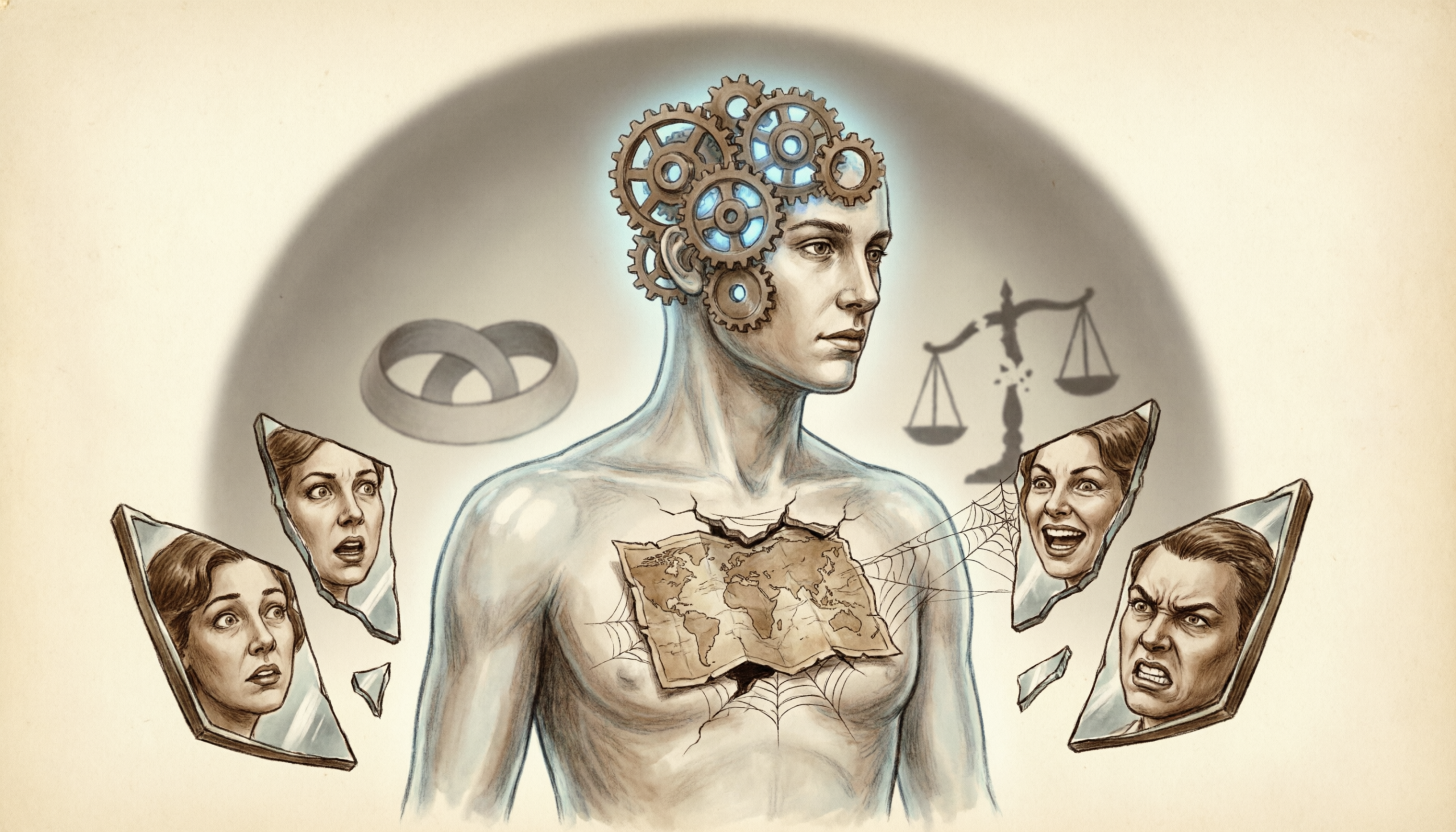
The psychology of conspiracy beliefs is tightly linked to ordinary cognitive biases, not some exotic failure unique to a small group of people. That is part of what makes the topic uncomfortable. The tendencies involved are widely human.

Confirmation bias plays a major role. Once someone suspects a cover-up, they start noticing evidence that appears to support it and discount evidence that does not. Contradictions are not always seen as disproof. In conspiracy thinking, they can be reinterpreted as proof that the conspiracy is especially sophisticated.
Proportionality bias matters too. People often assume big events must have big causes. If something historically significant happens, a mundane explanation can feel emotionally unsatisfying. It seems too small for the scale of the outcome. That makes secret plots psychologically attractive because they match the perceived magnitude of the event.
Agency detection also helps explain the appeal. We are highly sensitive to signs that someone is doing something on purpose. From an evolutionary perspective, it is safer to over-detect agency than under-detect it. Hearing a noise in the bushes and assuming an agent is there may save your life. In modern information environments, that bias can push people to see hidden coordination where there is none.
None of this means every suspicion is irrational. Real conspiracies do happen. Governments lie. Corporations conceal information. Groups coordinate in secret. The trade-off is that healthy skepticism and conspiratorial thinking are not the same thing. Skepticism is responsive to evidence. Conspiratorial thinking often protects itself from evidence.
Identity, belonging, and the social side of belief
People do not adopt beliefs in a vacuum. They do it in communities, and often for social reasons that feel as important as factual accuracy.
Conspiracy beliefs can offer identity. They let people see themselves as unusually awake, independent, or resistant to manipulation. That can be deeply rewarding, especially for someone who feels dismissed, disoriented, or disconnected from mainstream institutions. Believing the “official story” is false becomes more than a factual claim. It becomes a statement about who you are.
There is also the appeal of belonging. Online spaces make this especially powerful. Social platforms do not just spread claims. They create mini-worlds where those claims become markers of membership. Shared suspicion can bond people quickly because it creates a strong line between insiders and outsiders. We know the truth. They are naive, corrupt, or brainwashed.
That identity layer helps explain why arguing with facts alone often fails. If a belief is tied to someone’s social world, correcting the claim may feel like threatening the person. They are not just hearing “this idea is wrong.” They may hear “your group is foolish” or “your sense of self is invalid.”
Why are some people more vulnerable than others?
Not everyone is equally drawn to conspiracy theories, though no one is immune. Research suggests that vulnerability rises under certain conditions: high anxiety, chronic uncertainty, low institutional trust, social alienation, and a strong need for cognitive closure.
Distrust is especially important. If someone already believes authorities are dishonest, exploitative, or indifferent, conspiracy explanations have fertile ground. In some cases, that distrust is not purely paranoid. It may be shaped by real experiences of betrayal, discrimination, or institutional failure. That does not make every conspiracy theory accurate, but it does mean the emotional logic can be understandable.
Personality factors may also play a role. Some studies link conspiracy belief endorsement with higher suspiciousness, greater receptivity to unusual patterns, and a preference for intuitive over analytical thinking. But this is not a simple intelligence issue. Plenty of smart people fall for conspiratorial claims. Intelligence can even help people build more elaborate rationalizations once they are motivated to defend a belief.
That is a useful corrective to the lazy stereotype that only gullible people believe strange things. Often, the bigger driver is motivated reasoning. People use their mental abilities not just to find truth, but to protect identity, reduce anxiety, and maintain coherence.
Why the internet makes it worse
The modern information environment is almost perfectly designed to amplify conspiracy thinking. Algorithms reward emotionally activating content. Suspicion spreads faster than nuance. A dramatic hidden-cause story is more clickable than a careful explanation involving uncertainty, mixed evidence, and systemic complexity.
The internet also collapses the old barriers between expert knowledge, speculation, entertainment, and outright fiction. A slick video, confident voice, and selective use of data can create the feeling of credibility even when the argument is weak. Repetition does the rest. The more often people encounter a claim, the more familiar and plausible it can start to feel.
Then there is the rabbit-hole effect. If you engage with one conspiratorial claim, platforms may serve you stronger versions of the same worldview. Over time, separate beliefs can fuse into a broader mindset in which nothing is accidental, institutions are uniformly deceptive, and the absence of evidence itself becomes suspicious.
Can you change someone’s mind?
Sometimes, but not usually by humiliating them.

Mockery can feel satisfying to bystanders, yet it often hardens the very beliefs it is meant to weaken. If someone already sees the world as hostile and deceptive, ridicule confirms the script. A better approach is curious, calm, and specific. Ask how they concluded. Ask what evidence would change their mind. Ask whether the explanation relies on assumptions that cannot be tested.
This works best when the goal is not winning but reopening thought. People are more likely to reflect when they do not feel cornered. That said, it depends on the person. Some conspiracy beliefs are loosely held and can soften with good conversation. Others are so tied to identity and community that direct persuasion is unlikely in the short term.
A more realistic aim is often reducing certainty rather than producing immediate conversion. If someone moves from absolute conviction to partial doubt, that is progress.
How to protect your own mind
The most useful defense is not blind trust. It is disciplined skepticism. That means slowing down when a claim triggers a strong emotional reaction, checking whether the evidence is independent, and noticing when a story feels compelling because it flatters your identity or confirms your suspicion.
It also helps to tolerate uncertainty better. Many false beliefs thrive because uncertainty is psychologically itchy. We want closure now. But reality is often incomplete, messy, and unresolved for a while. Being able to say “I do not know yet” is an underrated cognitive skill.
This is where evidence-based psychology earns its keep. The goal is not to shame people for wanting answers. It is to understand the mental shortcuts, emotional needs, and social pressures that shape belief in the first place. The more clearly we see those forces, the less easily they can steer us.
The psychology of conspiracy beliefs is ultimately not just about extreme ideas. It is about what happens when the human need for certainty, control, and belonging outruns the evidence. If you can spot that process in real time – in media, in other people, and especially in yourself – you become harder to manipulate and better at thinking clearly when the world gets noisy.